0

 English
 简体中文

Content
A three-seat sofa that ships in a carton 118 cm long, 66 cm wide and 44 cm deep is not a smaller sofa. It is the same sofa, vacuum-compressed to roughly half of its assembled volume, folded at the frame joints and strapped inside a single-wall corrugated box.
That one change at the packing station rewrites most of the buying decision. The carton decides how the piece enters the building. The foam grade decides whether the seat comes back to full shape in a day or never fully recovers. The compression ratio decides what the freight costs and what a buyer can reasonably expect on delivery day.
What a Couch in a Box Actually Covers
A couch in a box is a fully upholstered sofa whose foam core is vacuum-compressed and folded during packing, so the finished piece ships in a single carton and expands back to shape after the tape is cut.
Retailers use the phrase for three delivery formats, and they behave very differently once the carton is sitting in the hallway.
- Vacuum-compressed upholstery. The sofa is already built and covered; only the foam is flattened. No tools, no loose panels, and the piece is usable, though not at final shape, within an hour of opening.
- Knock-down panels. Flat-packed frame parts, covers and loose cushions. Expect 30 to 90 minutes of assembly with a hex key and a fair amount of floor space.
- Modular sections in rigid cartons. Two to four boxes, none of them compressed. The modules clip or bolt together, and each box can usually be carried by one person.
Only the first format earns the name honestly. If a listing shows separate arms, a base and a backrest with bolts, it is flat-pack furniture in sofa form, and the foam inside has never been compressed at all.
Foam Density Decides Whether Compression Works
Compression only works on foam that recovers completely, which in practice means seat cores in the 28-35 kg/m3 range with an open-cell structure and hardness around 45-55 ILD.
Lower-density foam, roughly 18 to 22 kg/m3, is where cheap compressed sofas fail. The cell walls crush instead of flexing, and the seat arrives with a visible dish in the middle that never fully lifts. The fault is not in the unpacking. It is in the specification sheet that was agreed months earlier.
Density is set when the foam block is poured, not when it is cut to size, which is why a supplier that runs its own sponge line controls the variable that matters most. Our own setup pairs a sponge factory with a finished-goods plant, so the block grade and the compression cycle are decided in the same building.
A full-foam build compresses more predictably than a spring unit. Springs can bend at the clip points under a compression strap and arrive with a lean that no amount of waiting corrects. A solid foam block either recovers or it does not, and the answer is visible within three days.
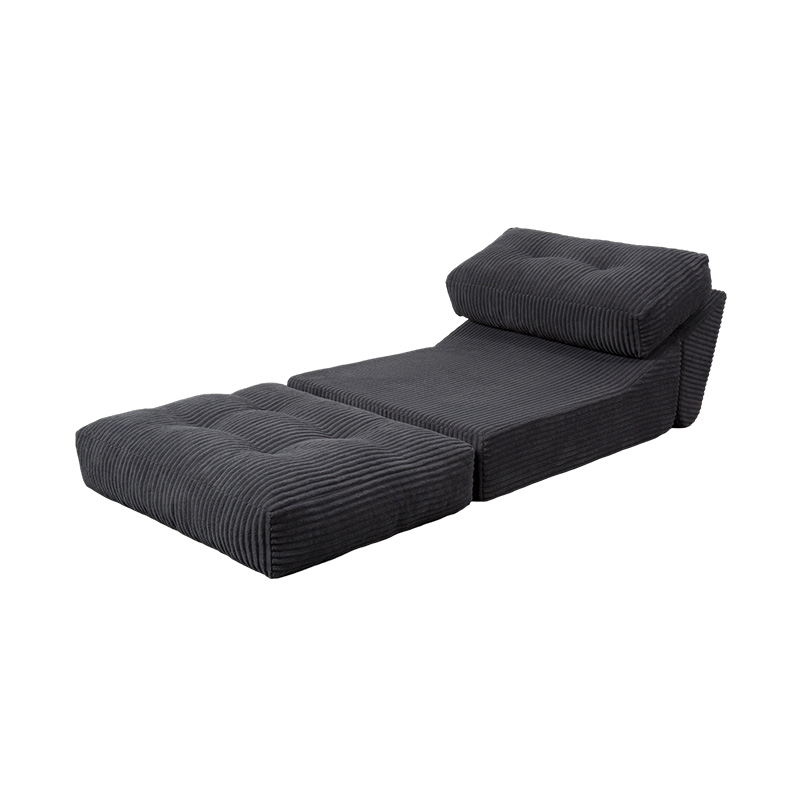
 Double Full-Foam Sofa in Off-White CorduroyA frameless two-seat sofa with D28/60 full foam and matching corduroy cushions, relevant here for judging predictable post-delivery recovery and no-assembly setup.View Product →
Recovery follows a curve rather than a switch. Most loft returns in the first 6 to 12 hours, corners and the seat front fill out over the next two days, and full shape is normally reached by hour 72. Cold slows everything down: a carton left in an unheated hallway may need an extra day. For a fuller breakdown of how density and hardness interact across the seating surface, the full-foam guide walks through the numbers.
Where a Compressed Sofa Wins and Where It Loses
A compressed sofa wins on access and on freight, and it gives up a little on instant firmness and on how much the buyer has to trust the foam specification.
What it does well
- Clears a 70 cm hallway, a tight stair turn or a small lift without a hoist
- One carton, one carrier, and far lower freight cost per unit by volume
- Returns and replacements become practical for online orders
- Easy to move again at the end of a lease or a short tenancy
What to watch
- Needs one to three days before the seat feels final underfoot
- Cover creases around the corners take about a week to settle
- The foam grade stays invisible until unboxing, so the spec sheet carries the risk
- Firm seats feel firmer still during the first 24 hours
The freight arithmetic explains why factories bother. An assembled three-seater occupies roughly 1.5 m3 of container space; the same piece compressed fits into about 0.34 m3. Across a 40HQ load that is dozens of extra units per shipment, and for a single online order it is the difference between a two-person delivery and a courier drop at the door.
Carton Dimensions, Doorways and Stair Turns
The carton, not the sofa, decides whether a delivery succeeds, and most single-carton sofas need a clear opening of roughly 66 to 76 cm plus enough turning space at the top of the stairs.
| Model | Assembled size | Carton size | Carton weight | Minimum clear opening |
| Two-seat, 160 cm | 160 x 90 x 78 cm | 95 x 62 x 40 cm | 38 kg | 70 cm |
| Three-seat, 210 cm | 210 x 92 x 80 cm | 118 x 66 x 44 cm | 52 kg | 76 cm |
| Modular L-shape, 260 cm | 260 x 165 x 82 cm | 3 cartons, largest 102 x 70 x 46 cm | 68 kg total | 72 cm |
| Single lounge chair | 95 x 88 x 75 cm | 92 x 60 x 38 cm | 24 kg | 66 cm |
Measure three things before ordering: the narrowest door on the route, the inside depth of the lift, and the diagonal at each stair landing. A 118 cm carton clears a 76 cm door on the flat because it passes at an angle, but the same carton cannot be rotated inside a shallow lobby. Allow roughly 10 cm of spare width at every pinch point rather than planning to the exact millimetre.
Where the route is genuinely tight, modular pieces solve it. A sectional ships as separate cartons, each under about 100 cm, and reassembles into any of several layouts in the room.
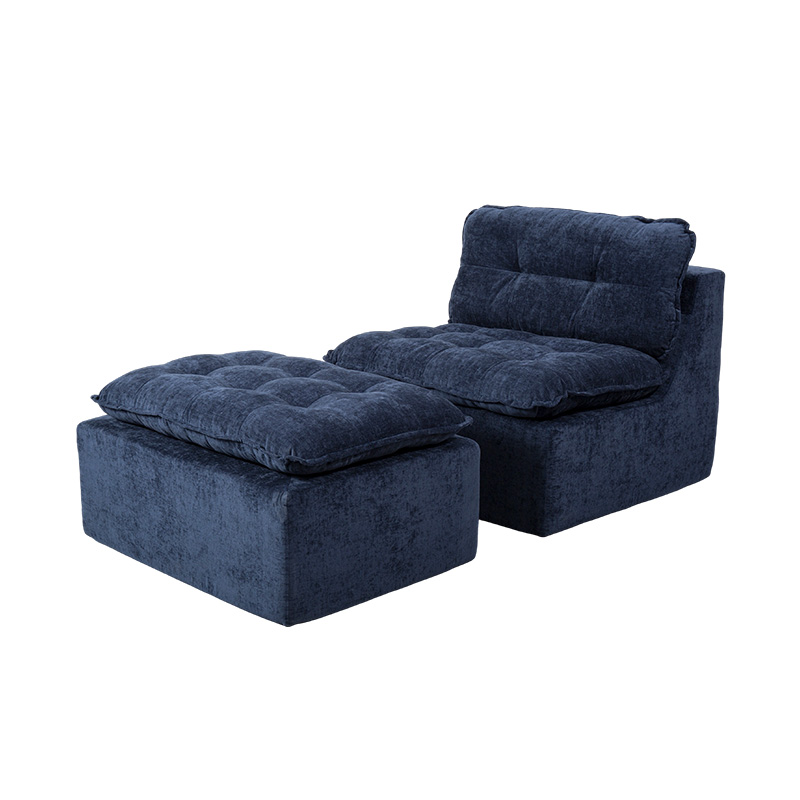
 Creative Modular Full-Foam Sofa in Dark GrayA frameless modular unit in dark gray chenille, sized for tight routes and combinable layouts; allow 24–72 hours for foam shape after unpacking.View Product →
The Unboxing Sequence, Step by Step
Unpack the carton in the room where the sofa will live, cut only the outer tape, and give the foam 24 to 72 hours before judging the shape.
- Move the closed carton to its final position first. Compressed panels are awkward to drag back through a doorway once they start to open.
- Cut the tape along the top seam only, then fold the flaps down. Keep the blade flat and away from the cover, and never slice along the length of the fabric.
- Lift the pieces out rather than tipping the box over. Set them upright and let the foam begin to rise before fitting any part together.
- Leave the sofa alone for the first six hours. Seat cushions and corner blocks finish expanding last, and handling them early can set a crease that takes weeks to fade.
- Dress the piece on day three, smooth the covers by hand, and plump the cushions weekly for the first month to settle the fill evenly.
Keep the empty carton flat behind a door for a fortnight. It is the only sensible way to return a compressed piece if the foam turns out to be under-specified.
What to Check Before You Order
Ask for carton dimensions, foam density and recovery time in writing; if any of the three is missing, the compression claim cannot be verified.
- Carton length, width, depth and weight, checked against the narrowest door on your route
- Foam density in kg/m3 and hardness in ILD, listed layer by layer rather than as one figure
- Stated compression ratio and expected recovery time at normal room temperature
- Cover construction: removable, washable, and whether the zip gives access to the foam core
- Whether the frame is compressed with the foam or shipped as a separate rigid section
- Warranty wording that specifically covers foam set or measurable sagging
Multifunctional models carry a second set of checks, because a folding mechanism adds hard parts that compression cannot fix. Confirm the hinge rating, the thickness of the seat platform and whether the backrest locks. A convertible frame that ships flat inside a compressed carton should be bench-tested at the factory, not assembled for the first time in a customer's living room.
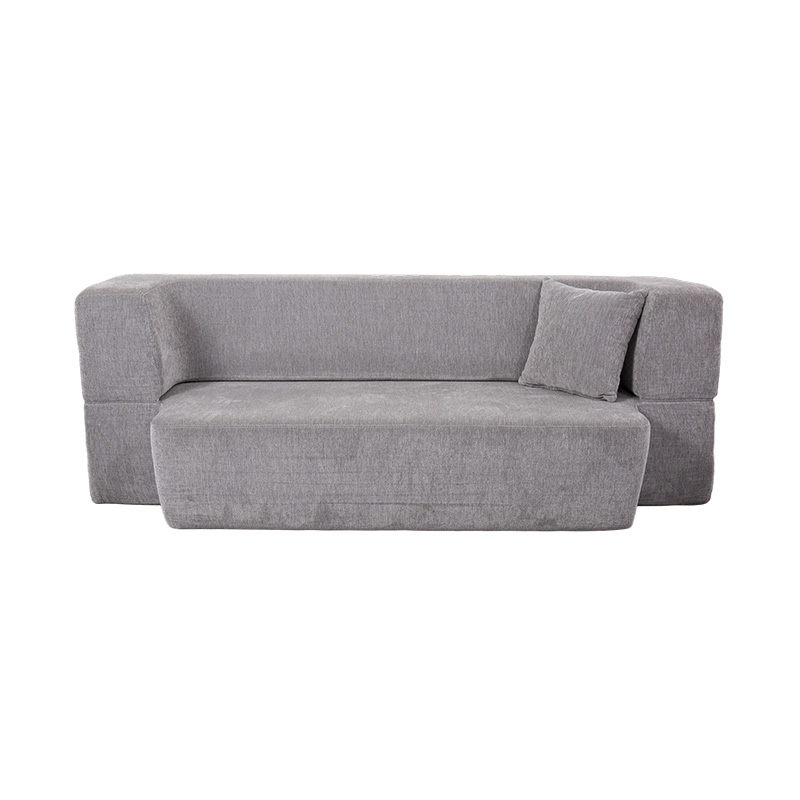 Convertible Multi-Functional Sofa Bed in Light GrayA customizable frameless sofa bed with D30/60 foam and included cushions, offering sofa-to-bed flexibility and compact packaging; check mechanism details before expecting full shape.View Product →
Frequently Asked Questions
How long does a couch in a box take to expand fully?
Most reach usable shape in 6 to 12 hours and full loft in 24 to 72 hours. Seat fronts and corners are always last, and a cold room adds roughly a day to the timeline.
Can a compressed sofa be re-compressed for a move?
No. Vacuum compression needs factory equipment and strapping that a household cannot reproduce, so once expanded the piece moves like any normal sofa.
Does compression shorten the life of the foam?
Not when the density is adequate. A 28-35 kg/m3 core that recovers within 72 hours shows no measurable loss of support, while foam under 22 kg/m3 is damaged during the first compression and stays that way.
Is a couch in a box suitable for everyday use?
Yes, provided the frame and the foam match the use. Check density, hardness and warranty terms that name foam set, and expect the cover rather than the core to be the first component to wear.