 0
0

 English
 简体中文
简体中文

Content
- 1 Why a Full-Foam Sofa Deserves a Close Look
- 2 What Sets a Full-Foam Sofa Apart
- 3 Key Factors to Evaluate Before Buying a Full-Foam Sofa
- 4 Full-Foam vs. Spring-Based Sofas: Side-by-Side View
- 5 How to Test a Full-Foam Sofa Before Committing
- 6 Who Should Choose a Full-Foam Sofa?
- 7 Working with a Manufacturer That Controls Foam Production
- 8 Final Thought
Why a Full-Foam Sofa Deserves a Close Look
After a few years of daily use, a spring-based sofa can develop creaking frames, sagging cushions, and even coils that push through the padding. A full-foam sofa eliminates that entire failure point by using shaped foam for the seat, back, and armrests instead of metal springs. If you are comparing sofas for a living room, bedroom, or compact apartment, a well-made full-foam sofa offers a practical balance of comfort, durability, and lower maintenance.
That does not mean every full-foam model performs the same. The real quality lies in the density of the foam, the strength of the frame, and the way the cover is constructed. Once you know how to evaluate those details, you can find a sofa that stays supportive for years without the typical problems found in spring-based alternatives.
What Sets a Full-Foam Sofa Apart
In a conventional sofa, springs sit under the cushions to absorb weight and provide bounce. In a full-foam sofa, the cushion and structural support come from dense blocks of polyurethane foam, often high-resilience foam that has better compression recovery. This design makes the seating surface more predictable and reduces the number of moving parts that can wear out.
The daily differences matter more than they first appear:
- No metal springs to fatigue or break, so the seat is less likely to develop a permanent hollow over time.
- Quiet movement with no creaking or rattling as people sit down or shift.
- More even support across the seat, because the foam carries the entire body weight rather than a network of coils.
- Simpler maintenance, since the foam core can be inspected and, in many cases, replaced independently.
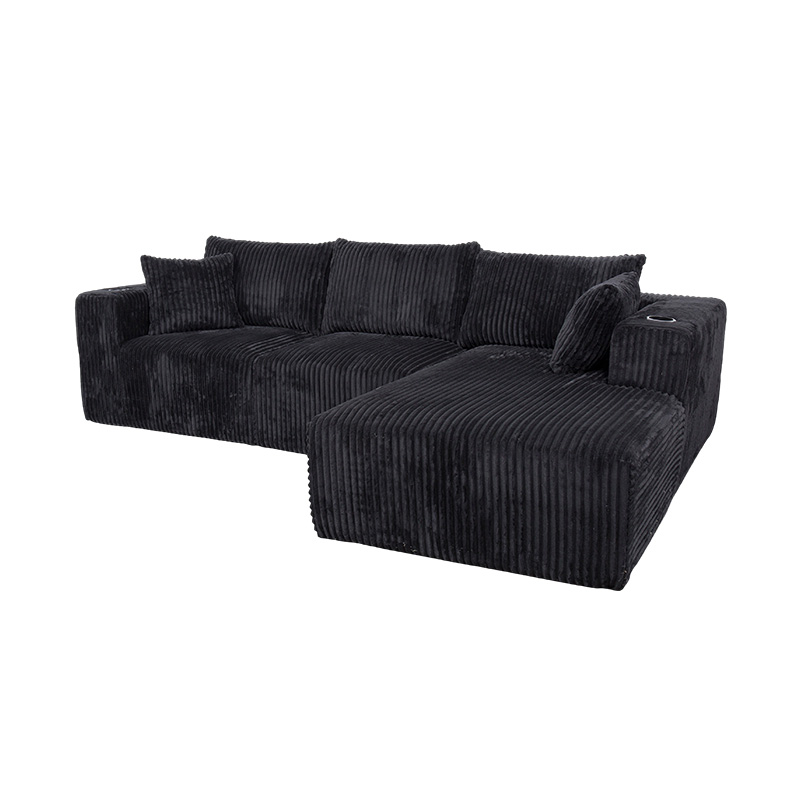
Full-foam construction also allows more design freedom. Foam can be shaped into curved corners, separate modules, and convertible forms that are difficult to achieve with a traditional spring frame. For example, a modular full-foam sofa set in deep blue corduroy can be rearranged to fit changing room layouts, which gives the sofa a longer useful life. This is also why a well-chosen full-foam sofa can be a smarter long-term investment than a low-priced spring model: the money goes into the core material rather than a mechanism that wears out.
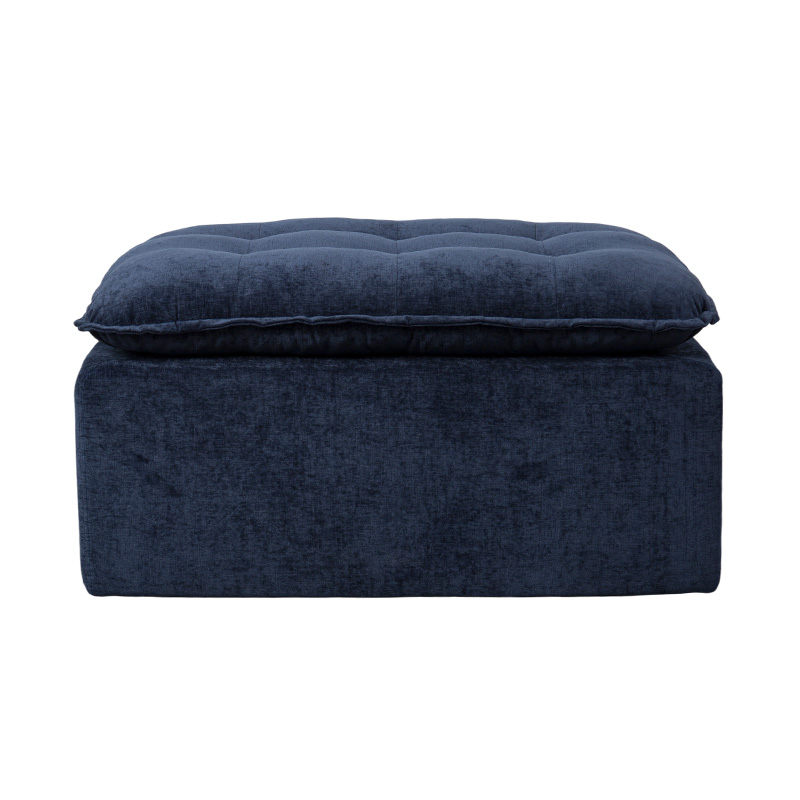 Custom Modular Full-Foam Sofa Set in Deep Blue Corduroy with Cushioned Backrest Anhui Ningxing Furniture Co., Ltd. is China Custom Modular Full-Foam Sofa Set in Deep Blue Corduroy with Cushioned Backrest and Matching ...View Product →
Key Factors to Evaluate Before Buying a Full-Foam Sofa
A "full-foam" label describes the construction method, not the quality standard. Before you buy, look beyond the marketing claims and check several specific points.
Foam density and hardness
Density is the strongest predictor of whether a full-foam sofa keeps its shape. Higher density means more polyurethane material in the foam, which resists compression and recovers better after each use. For a family sofa, a seat cushion density below 1.8 lb/ft³ is a warning sign, while 2.0 lb/ft³ or higher is a more reliable starting point for daily seating.
Hardness, often expressed as an ILD (indentation load deflection) number, controls initial comfort. Lower ILD gives a softer feel; higher ILD feels firmer and gives more support. There is no perfect number for everyone. A heavier person usually benefits from a firmer cushion, while a lighter person may find the same cushion too stiff. Ask the supplier for both the density and ILD, then choose a value that matches your body weight and preferred sitting style.
Frame, base, and cover
A full-foam sofa still needs a stable structure underneath. Look for a solid wooden or engineered wood frame and a flat base that supports the foam over its full surface. If the frame feels flexible when you press the seat, the sofa will probably sag in that spot later.
The fabric is the other half of the durability equation. Since the foam core is not meant to be tossed into a washing machine, a removable and well-sewn cover makes routine care easier. For homes with children or pets, choose a tightly woven fabric with good abrasion resistance rather than a delicate pile that can flatten quickly.
Full-Foam vs. Spring-Based Sofas: Side-by-Side View
To make an informed buying decision, it helps to compare the two constructions in the categories that homeowners care about.
| Aspect | Full-Foam Sofa | Spring-Based Sofa |
|---|---|---|
| Support mechanism | Shaped high-density foam carries the body | Metal springs under foam and padding provide bounce |
| Most common failure | Foam compression if the density is too low | Spring fatigue, sagging, or springs poking through |
| Noise | Largely silent | Can squeak or creak with age and movement |
| Typical lifespan | 7–10 years with quality foam and frame | 5–8 years depending on spring and padding quality |
| Maintenance | Easy to inspect; foam and cover can be replaced | Hidden spring system complicates repairs |
| Design flexibility | Works well with modular, curved, and convertible designs | Usually limited to traditional fixed frames |
The table shows why full-foam sofas have become a popular replacement for spring sofas in many homes. They are not automatically better in every aspect; some buyers prefer the lively bounce of a spring system. But a full-foam sofa gives you a clearer, more controllable feel, which makes it easier to evaluate before you buy.
How to Test a Full-Foam Sofa Before Committing
Whether you are in a showroom or considering a sofa from a factory, a few simple checks reveal a lot about construction quality.
- Press the seat and backrest. The foam should compress with even resistance and return to shape quickly. A slow-returning or visibly dented cushion suggests low-density foam.
- Sit near the front edge. A well-built full-foam sofa supports the edge without letting you feel a hard frame. If the edge collapses, the base layer may be too thin.
- Lift one side of the sofa. Dense foam and a solid frame make a noticeable difference in weight. An extremely light sofa usually means less foam or a weak base.
- Ask for the foam density and ILD in writing. A manufacturer that cannot provide those figures may also be vague about other specifications.
For a deeper look at the technical choices that affect comfort and service life, read our full-foam sofa guide on comfort and durability.
Who Should Choose a Full-Foam Sofa?
Full-foam sofas suit several common living situations, and they are not the right answer for everyone. Start with your own usage patterns.
Small apartments or flexible layouts: Modular foam sections make it possible to transform a seating area into a guest bed or an L-shape without heavy mechanisms. A convertible multifunctional sofa bed in light gray velvet can serve as a couch during the day and a sleep surface at night.
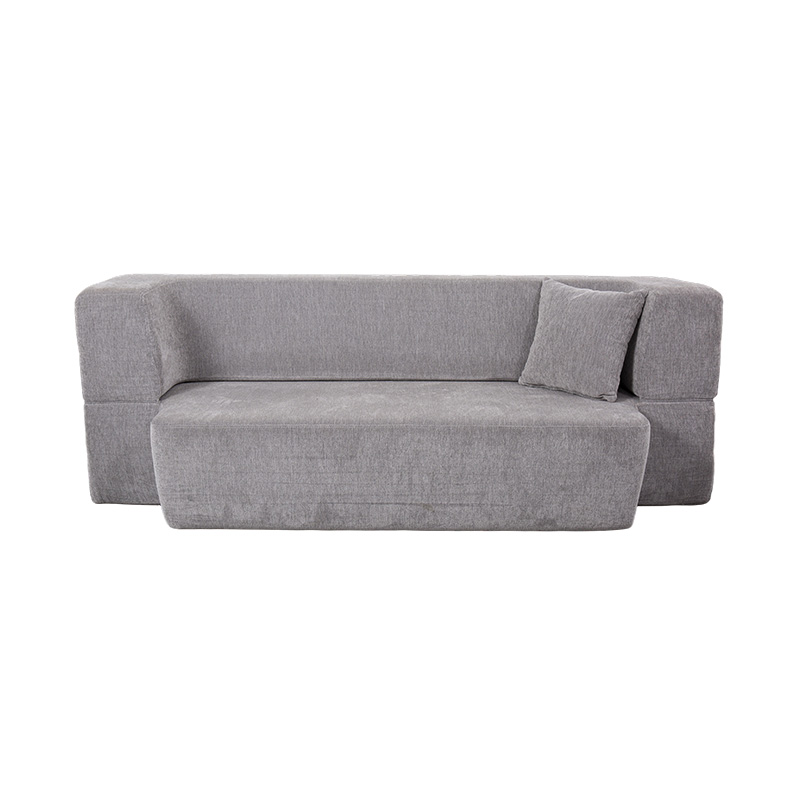 Custom Convertible Multi-Functional Sofa Bed in Light Gray Velvet with Cushions Anhui Ningxing Furniture Co., Ltd. is China Custom Convertible Multi-Functional Sofa Bed in Light Gray Velvet with Cushions Manufacturers...View Product →
Families with children or pets: The absence of metal springs removes a hidden hazard, and durable fabrics can handle frequent cleaning if you choose the right cover material.
People concerned with posture and back support: A firmer, even seat gives the spine a more stable base than a spring sofa that sinks unevenly. The hardness can be adjusted by choosing a different foam ILD.
Buyers who want a clear quality check: With no spring system hidden inside, you can directly test the foam and read its specifications. This transparency helps when ordering from a manufacturer.
If your priority is a deep, plush feel with noticeable bounce, a spring-based sofa with a thick topper may suit you better. A full-foam sofa will typically feel firmer and more even, especially during the first few months.
Working with a Manufacturer That Controls Foam Production
The quality of a full-foam sofa depends heavily on the foam itself. When a factory only assembles components supplied by others, there is less control over density and hardness. A manufacturer that produces its own foam can adjust the formulation, test samples, and make consistent batches.
Our production history includes more than fifteen years of furniture-making, with separate factories for finished furniture and foam products. This vertical setup is useful when you need custom dimensions, a specific fabric, or a foam density matched to your intended use. You can learn more about our furniture factory to understand how we control the process.
A direct conversation with the factory also helps clarify specifications that are hard to judge from photos. For a typical living room, a 3-4 seater full-foam sofa in dark gray jacquard chenille demonstrates how fabric choice and foam density combine into a durable everyday seat. If you have a complex layout or unusual size requirement, you can send the details through our contact page and get a construction recommendation before placing an order.
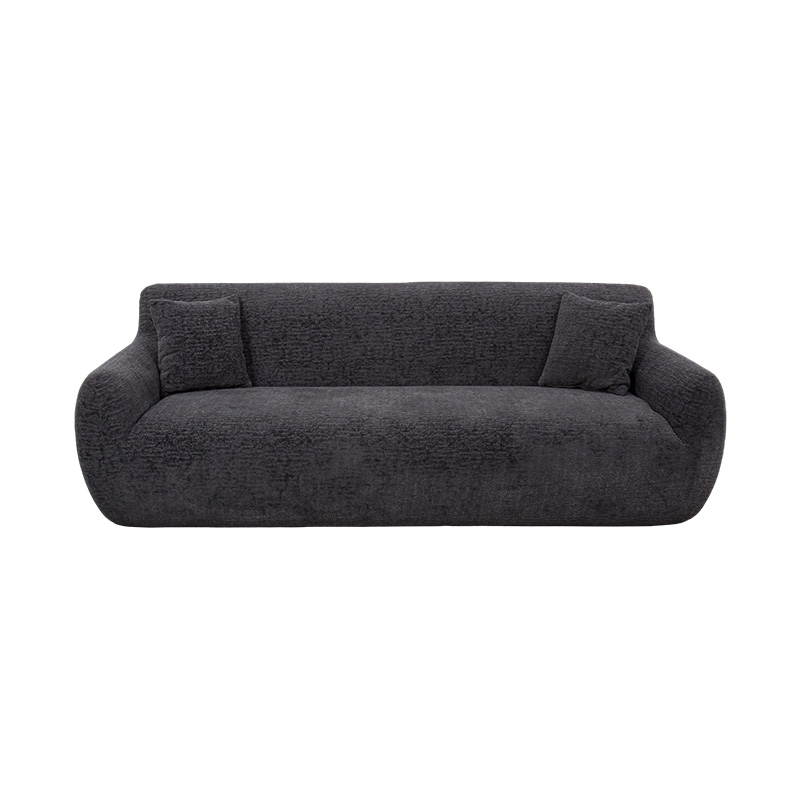 Custom 3–4 Seater Full-Foam Sofa in Dark Gray Jacquard Chenille Fabric ManufactuAnhui Ningxing Furniture Co., Ltd. is China Custom 3–4 Seater Full-Foam Sofa in Dark Gray Jacquard Chenille Fabric Manufacturers and Comp...View Product →
Final Thought
A full-foam sofa is worth choosing when you value consistent support, fewer mechanical breakdowns, and a construction that is easy to understand and maintain. By checking foam density, frame quality, and fabric with the same attention you would give a spring-based model, you can avoid the common pitfalls that give foam sofas an undeserved reputation for early sagging. When the core materials are right, a full-foam sofa will continue to seat family and guests comfortably for many years.