 0
0

 English
 简体中文
简体中文

Content
If your overnight guests currently outnumber your bedrooms, a sectional sleeper sofa is the most practical piece of living-room furniture you can buy: roughly sixty inches of wall space seats three by day and sleeps two by night. Not every convertible sectional earns that space, though. Whether yours hosts weekend guests for a decade or sags within two years comes down to three decisions — the conversion mechanism, what is inside the cushions, and whether the footprint actually fits your floor plan. Work through those questions in that order and everything else about the purchase falls into place.
What Counts as a Sectional Sleeper Sofa
A sectional sleeper sofa merges two furniture categories: the L-shaped or modular seating plan of a sectional, and a built-in conversion that turns part of it into a sleeping surface. Compared with a standard one-bench sleeper, the sectional format adds a chaise or corner module, which changes how you lounge during the day and how much floor the bed claims once it is open. Market-wide, three mechanisms dominate, and each sets different expectations for comfort, price and daily handling.
Pull-out sectionals
A metal or wood frame folded inside the seat carries a dedicated mattress, usually 4 to 6 inches thick. Pull the handle, the platform glides out and unfolds, and guests sleep on an actual mattress with defined edges. It is the most familiar option and still the right fit when people stay over weekly, though the folded frame adds weight, cost and a hollow storage box beneath the seat.
Fold-flat and convertible sectionals
There is no separate mattress here. The backrest tips forward, the seat rolls or folds out, and the seat plus back cushions together form the sleeping surface. Conversion takes seconds, nothing is stored inside the frame, and seating depth is often more generous because no mechanism eats the interior volume. The trade-off is a firmer, flatter feel for the sleeper.
Modular transformer sectionals
Individual modules — chaise, armless seat, ottoman — detach and rearrange into a flat platform bed. This is the most flexible arrangement for rooms that serve several purposes, and because the modules are upholstered blocks rather than a sprung frame, they usually ride on an all-foam structure that keeps its shape through years of repeated conversion.
| Mechanism | Sleeping Surface | Setup Time | Best Suited For |
|---|---|---|---|
| Pull-out | Dedicated mattress, 4 to 6 in. thick | 30 to 60 seconds | Regular guests who want a true mattress |
| Fold-flat convertible | Seat and back cushions combined | Under 15 seconds | Frequent short stays and small rooms |
| Modular transformer | Repositioned foam modules | 2 to 3 minutes | Multi-use rooms and changing layouts |
The mechanism you choose should follow your hosting pattern, not the other way around. A pull-out that opens twice a year is money and weight you never use; a cushion-fold surface asked to host cousins every weekend will feel thin by spring.
Foam Construction: The Detail That Decides Lifespan
Here is the technical point that matters more than any fabric swatch: what is inside the seat and the sleeping deck. Traditional sleeper sectionals sit on a zigzag spring deck, and pull-out models add a metal grid beneath the mattress; both are the reason owners report pressure points and creaking rails within a few years. Full-foam construction replaces those springs with engineered foam blocks across the entire frame, so support stays even from edge to edge and nothing metallic works loose or pushes through the deck.
Density is the number to ask for. High-resilience foam rated around 1.8 pounds per cubic foot or better recovers after a weekend of guests; bargain-grade foam craters exactly where people sleep. Because we operate our own sponge factory feeding the finished-furniture line, cushion density is a specification we control in-house rather than outsource — one reason modular full-foam designs hold their shape under daily reconfiguration. For a closer look at how the two constructions age differently in real living rooms, see our comparison of full-foam and spring sofa construction.
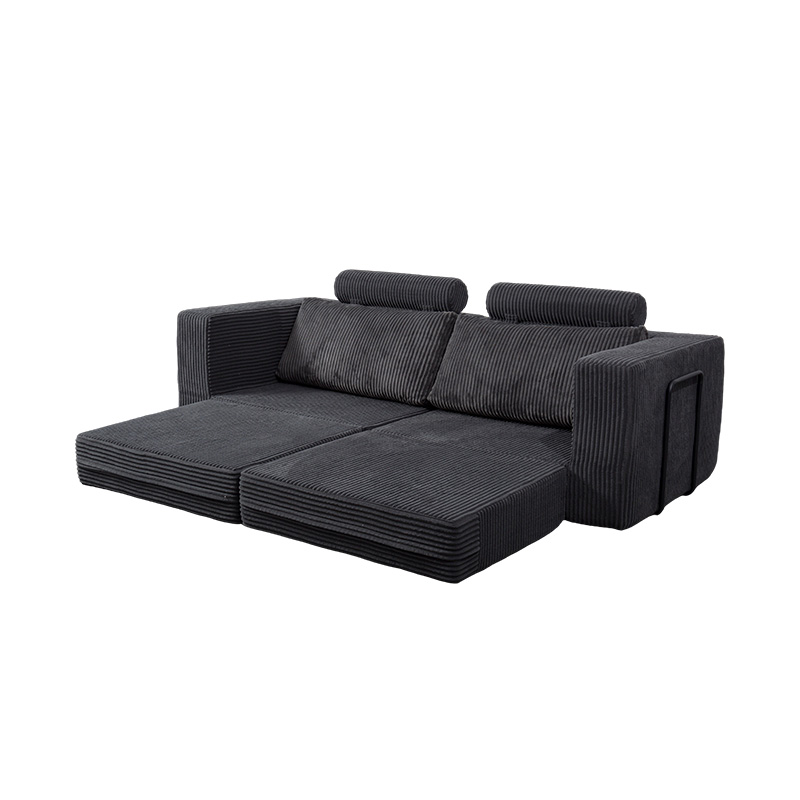
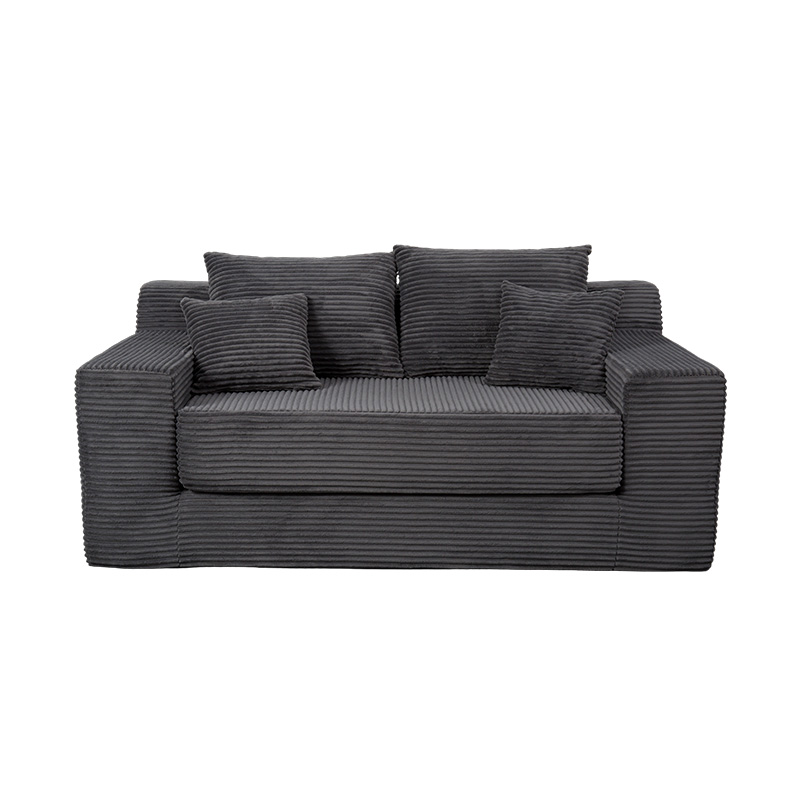 Dark Gray Corduroy Modular Sofa Bed with Multiple CushionsA modular full-foam design with dual sofa and bed configurations, D30/D60 foam density, and no assembly required. A strong pick after the discussion of foam density, since its construction is controlled in-house and holds shape through daily reconfiguration.View Product →
Measure the Room Before You Fall in Love With One
Ask any furniture-service technician what causes most sleeper sectional complaints and the answer is rarely comfort — it is geometry. The bed opens toward the room, so the deployed footprint can reach 90 inches or more from the wall, and a sofa that clears the front door can still fail in the hallway turn. Before you shortlist anything, measure and write down five numbers:
- Total closed width of the sectional, chaise included
- Depth from wall to the front edge of the chaise
- Open length, meaning wall to the far edge of the deployed bed
- The walkway you are willing to give up; keep at least 30 inches for a comfortable path
- The delivery route: door width, tightest hallway turn, and elevator depth where relevant
A full-size sleeping deck does not fold in half, so if any part of the route is narrower than the module, delivery fails no matter how good the sofa is. When clearance is tight, favor a fold-flat design that converts in place instead of projecting a platform toward the room.
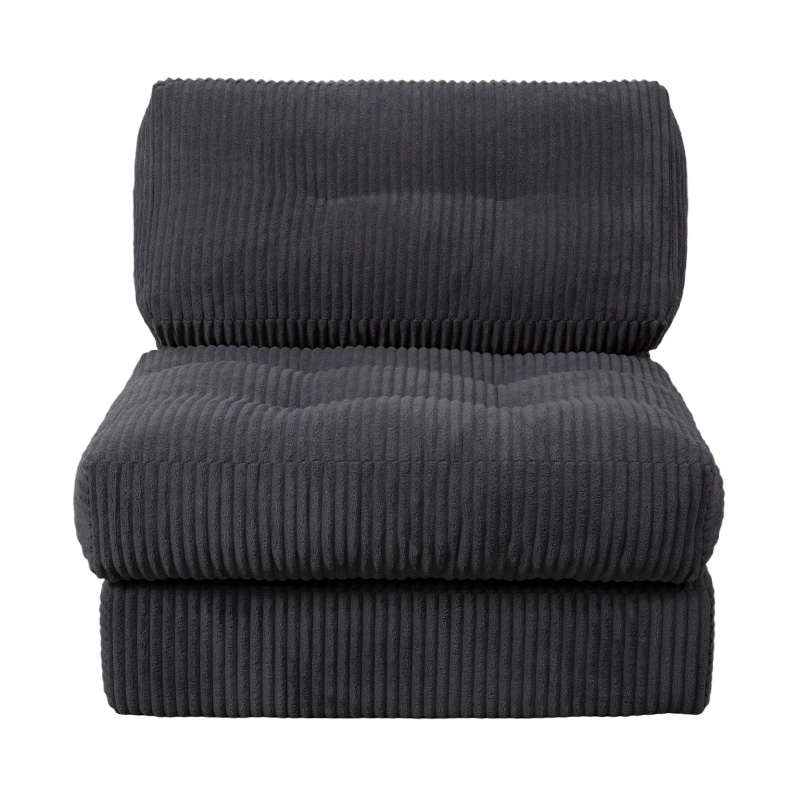 Foldable Full-Foam Sofa Bed with Ergonomic BackrestThis compact 93cm-wide sofa bed converts in place rather than projecting a platform toward the room, matching the clearance advice in the surrounding paragraphs. Full-foam construction, shredded foam fill, and an ergonomic backrest suit tight hallways and small apartments.View Product →
Upholstery That Survives Real Life
Fabric choice decides how the piece looks in year three, not just in the showroom. Three upholsteries dominate convertible sectionals, and each has a distinct working profile:
- Chenille is dense and softly ribbed, shrugs off everyday abrasion, and suits households that use the sectional as the main seat every evening.
- Corduroy brings a wider rib and a casual texture; in dark shades it hides the light rubbing that upholstery inevitably collects along the front edge of the seat.
- Velvet reads formal but wears better than its reputation suggests — a tight, low pile in a mid-dark tone is among the most forgiving surfaces for a sofa that doubles as a bed.
On color, dark gray remains the pragmatic pick for a high-traffic sleeper. Deeper tones such as emerald green make a stronger design statement and sit best in rooms with lighter surrounding decor. Whatever you choose, confirm the cleaning code and test the sample against a real stain — coffee, not water.
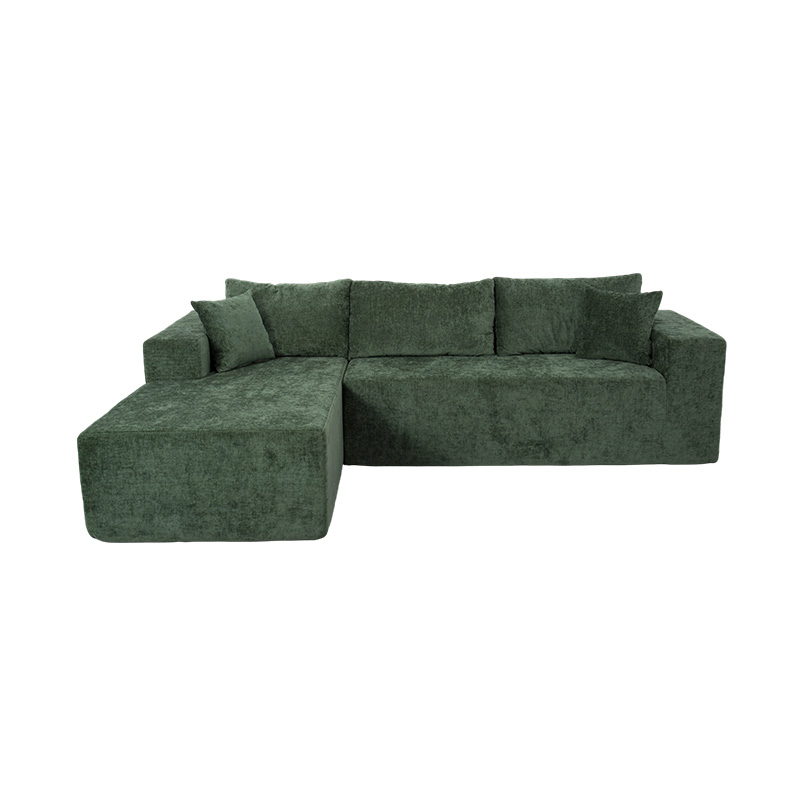 Emerald Green Velvet Modular L-Shaped Corner SofaAn L-shaped corner sofa in deep emerald upholstery, sized W262 × D175cm with D35/60 foam cushions and no assembly. It illustrates the article's point that deeper tones like emerald make a stronger design statement in rooms with lighter surrounding decor.View Product →
Build Out the Guest Setup Around It
A sectional sleeper works best as the anchor of a complete guest arrangement rather than a standalone compromise. A storage ottoman within reach of the bed keeps spare sheets and a blanket off the closet shelf, then doubles as a side seat or tray table by day. A fabric bench at the foot of the arrangement gives guests a landing spot for luggage, and in studio apartments a second small seat lets two people share the room without crowding the bed. None of these pieces needs to match exactly; a consistent upholstery family and tone do the visual work.
A Six-Point Checklist Before You Order
- Tape the closed and open footprints on your floor with painter's tape and live with the outline for two days.
- Ask for foam density and frame material in writing; if a seller cannot state them, treat that silence as an answer.
- Convert the bed yourself twice in the showroom and note whether one adult can do it alone.
- Check the stated weight rating of the sleeping deck, not just the seat.
- Confirm the fabric cleaning code and whether cushion covers are removable.
- Walk the delivery path with a tape measure before ordering, not after.
Buyers who want to compare construction across a range rather than a single model can browse our complete full-foam sofa lineup to see how these specifications translate across sizes, fabrics and layouts.
Designed honestly, a sectional sleeper sofa removes the compromise between a living room you enjoy and a guest room you cannot spare. The engineering that makes it work is mostly invisible — foam density, deck structure, hinge geometry — which is exactly why it pays to buy from a maker who builds those layers in-house. We have manufactured living-room seating since 2009, with our own sponge plant supplying the finished-furniture line, and the same three fundamentals decide every model we ship: a mechanism matched to real hosting habits, foam specified for daily recovery, and a floor plan measured before the order. Get those right and one piece of furniture will seat your family tonight and sleep your guests tomorrow.