 0
0

 English
 简体中文
简体中文

Content
- 1 What a Durable Fabric Sofa Actually Means
- 2 Two Numbers That Predict How Long a Fabric Sofa Lasts
- 3 Fabric by Fabric: Which Upholstery Survives Daily Use
- 4 Fabric Is Half the Story: Foam, Frame and Stitching
- 5 Matching the Cover to the Room: Kids, Pets, Rentals and Bedrooms
- 6 A Five-Minute Check Before You Buy
- 7 Frequently Asked Questions About Durable Fabric Sofas
A sofa that gives up in year three rarely fails because the fabric was bad. It fails because a 15,000 rub cover was wrapped around 22 kg/m3 foam on a stapled frame. A durable fabric sofa is engineered in three layers at once, and the cover is only the most visible one. Buyers who compare sofas by swatch alone are judging the least predictive part of the assembly.
What a Durable Fabric Sofa Actually Means
A durable fabric sofa is one whose cover, cushion core and frame each meet a measurable threshold, so the sofa keeps its shape and its appearance through eight to ten years of daily loading.
Definition
A fabric-upholstered sofa whose cover resists abrasion and pilling, whose foam core holds its density under repeated compression, and whose frame and seams keep the assembly square and quiet.
Durability in a fabric sofa is a three-part property, and each part fails on its own schedule:
- Cover fabric: abrasion rating, pilling behaviour and cleanability.
- Cushion core: foam density, resilience and the wrap layer above it.
- Frame and seams: joint type, support base and stitch density.
The three layers age at different speeds, which is why complaints about fabric sofas are so often misdiagnosed. A dense chenille rated at 40,000 rubs will look tired long before the yarn breaks if the seat foam has lost 20 mm of height. Check the layer underneath before blaming the cover.
Two Numbers That Predict How Long a Fabric Sofa Lasts
The Martindale abrasion rating of the cover and the density of the seat foam, measured in kg/m3, predict more about service life than the brand, the price band or the look of the swatch.
Number one: Martindale double rubs
The test drags a standard wool abradant across the fabric under load and counts how many double rubs the cover survives before threads break. Contract upholstery usually starts at 40,000 rubs; domestic sofas are often sold at 15,000 to 20,000.
Number two: foam density in kg/m3
Density is not hardness. A 22 kg/m3 seat cushion feels fine in a showroom because it has never carried anyone for an hour. A 30 to 35 kg/m3 high-resilience foam keeps its height, so the cover stays taut instead of bagging across the platform. Back cushions and ottoman tops can sit lower, at 22 to 25 kg/m3, without shortening the sofa's life. Ask for both figures in writing: a factory that runs its own foam line can hold a density tolerance, while buyers of spot-market cut foam cannot.
Fabric by Fabric: Which Upholstery Survives Daily Use
Dense jacquard chenille and performance polyester blends last longest on a sofa, followed by corduroy, teddy and faux sherpa covers, linen blends and standard velvet.
Weave structure and pile height matter more than the fibre name printed on the swatch card. A tight, low-pile weave resists abrasion and pilling; a loose weave catches claws and releases fibres onto the floor.
| Fabric family | Double rubs | Pilling | Cleaning code | Best suited to |
| Performance polyester blend | 50,000+ | Low | Water-based (W) | Family living rooms, pets, rentals |
| Dense jacquard chenille | 35,000-45,000 | Low | Water or solvent (W/S) | Daily seating, main sofa |
| Corduroy, poly-cotton | 25,000-30,000 | Low to medium | Water-based (W) | Bedrooms, textured interiors |
| Teddy, faux sherpa | 20,000-25,000 | Medium | Water-based, brush after cleaning | Accent chairs, occasional seating |
| Linen and linen blends | 15,000-20,000 | Low, creases easily | Water-based (W) | Adult households, light traffic |
| Standard velvet | 15,000 | Medium, crush marks | Solvent (S) | Guest rooms, formal areas |
Teddy velvet is often dismissed too quickly. On a low-traffic wall or in a bedroom, a dense teddy cover with a firm backing handles daily sitting well, and the pile hides the small marks that a flat weave shows immediately.
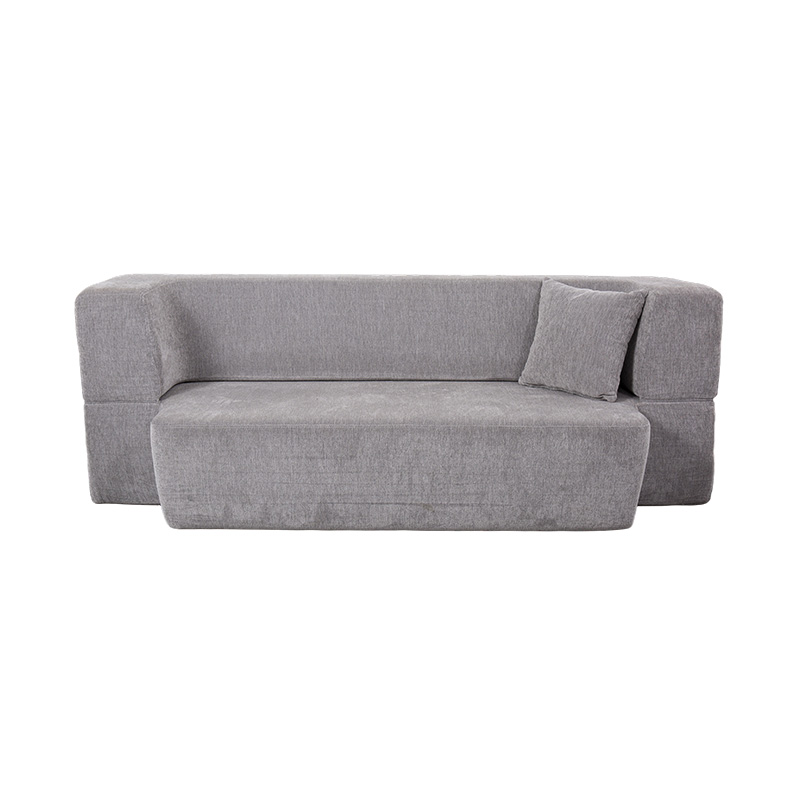
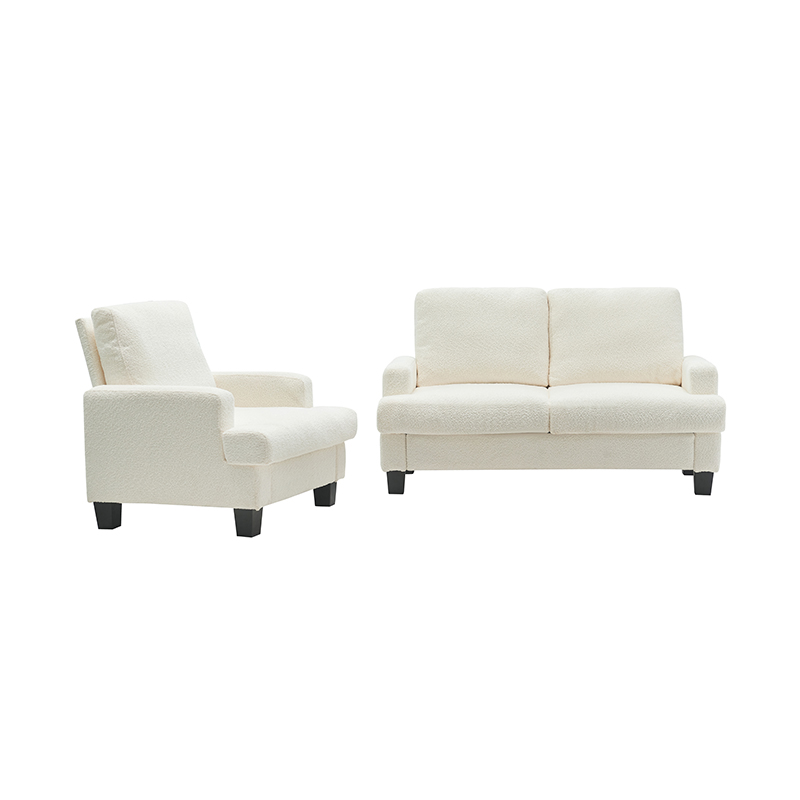 Modern Teddy Velvet White Fabric SofaDouble seat product size: W144*D81*H86 Single seat product size: W83*D81*H88 Sample is teddy velvet fabric, solid wood frame, rubber wood feetView Product →
Fabric Is Half the Story: Foam, Frame and Stitching
A 50,000 rub cover still ends up at the kerb if the frame flexes or the foam collapses, so durability has to be judged as an assembly rather than as a piece of cloth.
What buyers usually compare
- Swatch colour and texture
- Price per seat
- Brand name and delivery date
- Cover material name
What decides the service life
- Foam density stated in kg/m3
- Frame joint and support base
- Seam type and stitch density
- Cushion wrap layer
Frames fail quietly. Stapled corner blocks, thin rails and webbing that stretches under load all show up as a sofa that rocks and creaks by year four. Sinuous springs and elastic webbing can both work when they are specified properly, but a full-foam base module removes the mechanical parts most likely to sag, which is why the construction behind the cover deserves the same attention as the swatch.
Before you order, ask two questions: how many double rubs does this cover carry, and what is the density of the seat foam? If a seller cannot answer both, the fabric is not your main risk. We keep a longer breakdown of why full-foam builds hold their shape in our notes on full-foam sofa durability.
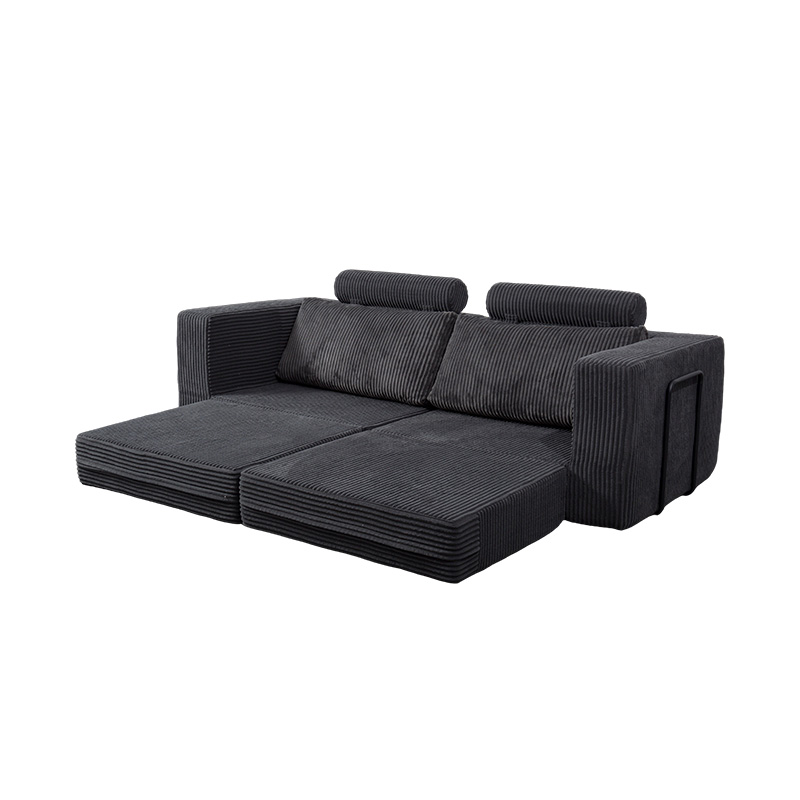
A large L-shaped build shows the difference clearly. The corners take the heaviest load, so the corner blocks, the foam block under the chaise and the cover on the seat front all have to be specified for it from the start.
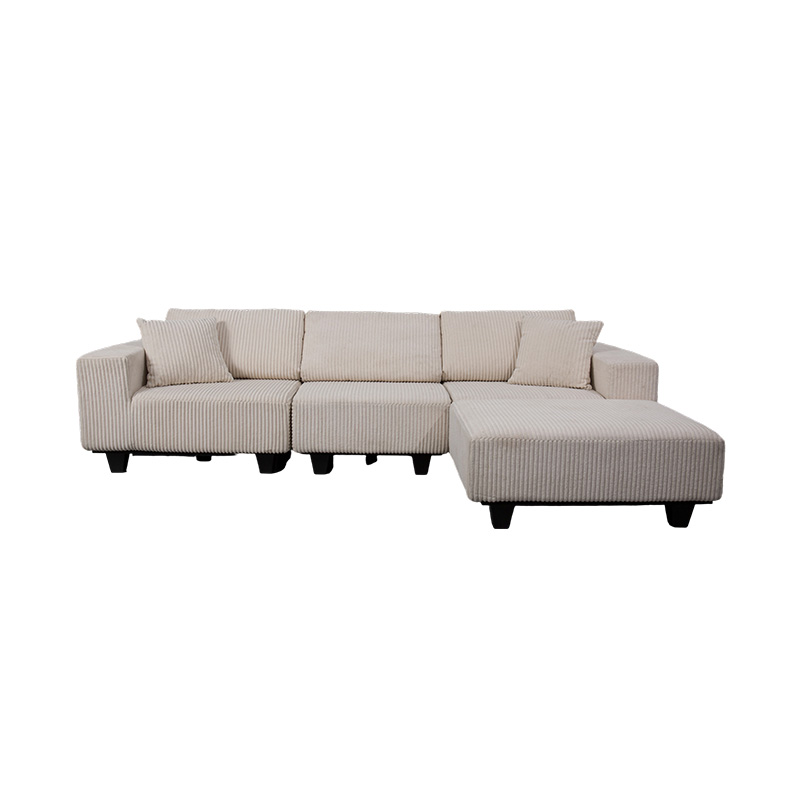 Large L-Shaped Corner Sofa in Off-White CorduroyA large L-shaped corner sofa with D35 foam and off-white corduroy, suited to modern living rooms and heavy-use corners.View Product →
Matching the Cover to the Room: Kids, Pets, Rentals and Bedrooms
The same cover can be the right or the wrong choice depending on who sits on it, so fabric selection should follow the traffic pattern of the room rather than the colour scheme.
- Homes with young children: performance polyester or dense chenille with a water-based cleaning code; low pile releases crumbs and wipes clean.
- Households with cats or dogs: tight, low-loop weaves only; deep pile and loose weaves catch claws and pull.
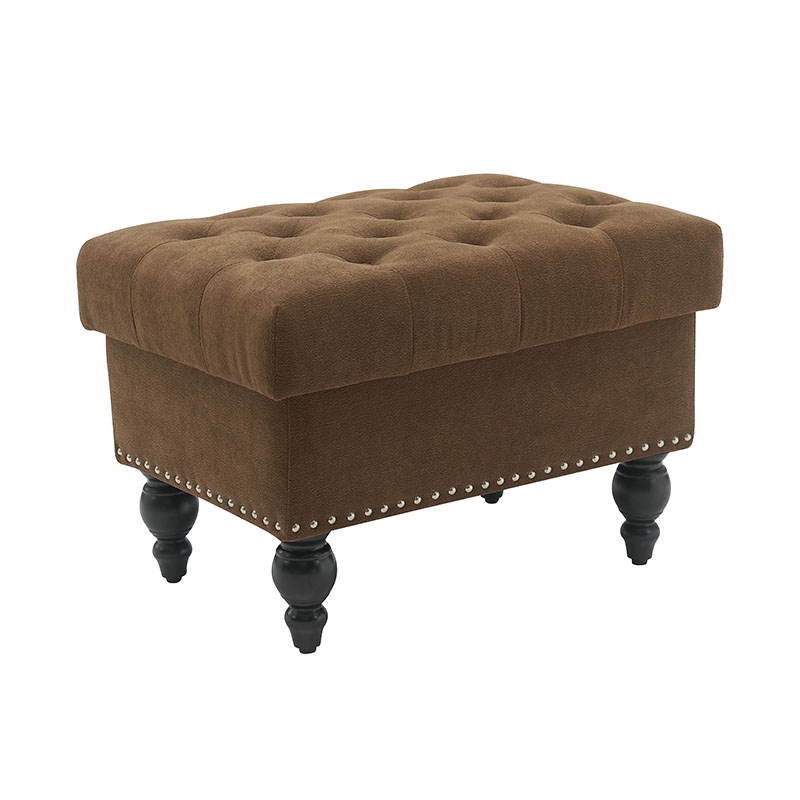
- Small apartments: modular pieces and storage-integrated seating cut the number of objects in the room. A fabric storage ottoman works as a seat, a footrest and a linen box at once.
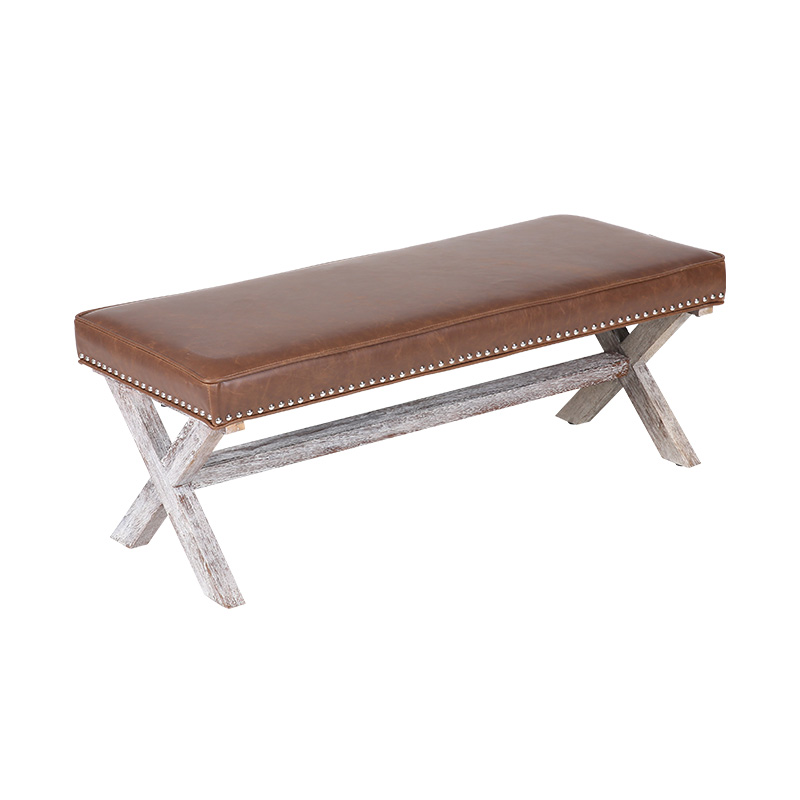
- Bedrooms and guest rooms: corduroy, flannel and velvet sit well on loveseats and bed-end benches, where abrasion is minimal.
Selection rule
Choose the fabric for the traffic the room gets, and choose the frame and foam for the way your household actually sits.
In a compact flat the companion piece often matters as much as the sofa. A square teddy storage stool in a warm brown sits at a bed end or beside a window and swallows blankets, cables and toys without adding visual weight.
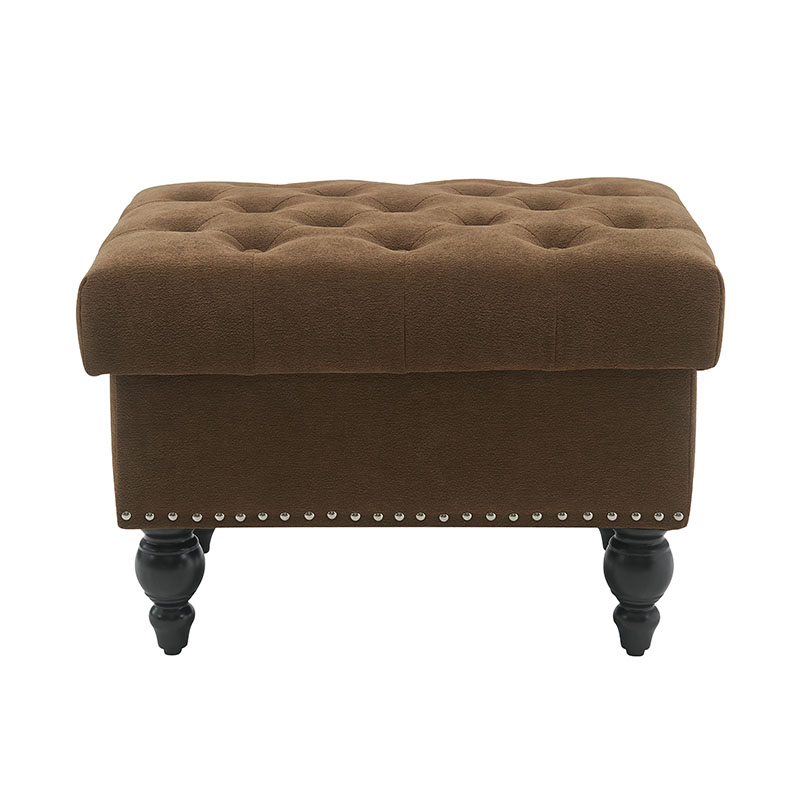 Fairy Tale Square Teddy Brown Fabric Storage StoolA compact square storage stool in soft teddy brown fabric, offering hidden storage, extra seating, or a footrest beside beds and windows.View Product →
A Five-Minute Check Before You Buy
You can separate a durable fabric sofa from a merely good-looking one in about five minutes in a showroom, using your hands and one question.
- Read the label under the seat cushion for composition and cleaning code.
- Press the foam flat with your palm and release; good foam springs back within a second or two.
- Push the arm outward while watching the base; movement or a click means a weak joint.
- Turn the cushion over and inspect the seams for double stitching and clean thread ends.
- Ask for the rub count and the foam density in writing, inside the quotation.
One detail worth checking: if the seat cover is removable over a fibrefill wrap, ask whether the core is a single foam block or bonded offcuts. Bonded offcuts feel identical on day one and lose height noticeably faster.
Frequently Asked Questions About Durable Fabric Sofas
Is 30,000 Martindale rubs enough for a family sofa?
Yes, for a living room with two to four hours of daily use. Below 20,000 the cover shows wear at the seat front and arm caps within roughly three years. Above 40,000 you are buying tolerance for heavy use rather than everyday sitting.
Which sofa fabric lasts longest with pets and children?
Tight, low-pile performance polyester blends and dense chenille jacquards hold up best. Avoid loose weaves, deep pile on the main seat and pale flat velvet. Stain-treated covers with a water-based cleaning code handle spills far better.
Does foam density matter more than the fabric?
It matters at least as much. Fabric decides how the surface looks; foam density decides whether the seat stays level. A 30 to 35 kg/m3 high-resilience foam outlasts a 22 kg/m3 block by years, whatever cover sits on top of it.
Can a fabric sofa be durable and easy to maintain?
Yes. Choose a tight low-pile weave, a cover you can vacuum monthly, and a cleaning code that matches products you already use. Rotating the cushions spreads the load and extends the time before any panel looks worn.
Send us your room dimensions, traffic pattern and cleaning habits, and we will reply with fabric options, foam densities and a quotation that lists both numbers. Contact the factory for swatch cards and test data.