 0
0

 English
 简体中文
简体中文

Content
A homeowner spends weeks choosing a sofa but settles for a bench purely based on looks. Six months later, the cushion sags, the fabric pills, and the legs wobble on a slightly uneven floor. A fabric bench should solve a real problem—extra seating, a landing spot at the door, a soft surface at the foot of the bed—without becoming a maintenance burden. The difference lies in three measurable factors: frame construction, fabric performance rating, and cushion density. If any of these is overlooked, the bench ages faster than the room it was bought for.
What a Fabric Bench Must Deliver: Frame, Fabric, and Fill
Not all fabric benches are built to the same standard. A long-lasting piece begins with a kiln-dried hardwood or furniture-grade plywood frame. Avoid benches made entirely from medium-density fiberboard (MDF) when the bench will see daily use, as MDF loses structural integrity over time, especially in humid climates. Look for a minimum of 9-layer plywood or solid hardwood rail construction. Corner blocking and double-dowel joinery add the reinforcement a bench needs to support 500 pounds or more without twisting.
Upholstery fabric is the next critical decision. A bench in a high-traffic entryway needs a fabric with an abrasion resistance of at least 25,000 double rubs (Wyzenbeek) or 40,000 Martindale cycles. Bedroom benches can perform well at 15,000 double rubs, but anything lower will show thinning fabric within two years. Polyester and performance linen blends offer better stain resistance than natural cotton and linen, though a light cotton-linen cover can work in a formal living room where the bench sees occasional use.
Cushion fill determines how the bench feels after three hours. High-resilience (HR) foam with a density of 1.8 pounds per cubic foot or higher provides firm support and recovers shape quickly. A bench built with a 1.8 lb density foam core wrapped in a layer of down-alternative fiber will seat softly without bottoming out. If the foam density is below 1.5, expect visible sagging within 18 months. Always verify foam density specifications before purchase; it is the most reliable predictor of seat longevity.
For a more detailed walkthrough of selection criteria, see our guide to choosing a fabric bench.
Fabric Bench Styles and Room-by-Room Placement
A fabric bench adapts to different rooms, but its design must match the function. The three most common categories are the end-of-bed bench, the entryway bench, and the dining bench.
End-of-Bed Bench
Placed at the foot of a bed, this bench should be roughly 75% of the bed’s width for visual balance. A king bed (76 inches wide) pairs well with a bench around 55–60 inches. Upholstery can be more delicate here, but still aim for 15,000 double rubs. A bench with hidden storage underneath the seat cushion adds value for linens or extra pillows. As explored in our guide on end-of-bed benches, the right bench can anchor the foot of the bed without overwhelming the space.
Entryway Bench
Here the bench needs high durability and a seat height of 18–19 inches for easy on-and-off with shoes. Performance-grade polyester or solution-dyed acrylic fabrics resist mud and moisture. A minimalist design with tapered legs leaves visual room in a narrow foyer, while a bench with a backrest provides comfort when tying shoelaces.
Dining or Table Bench
Paired with a rectangular table, a fabric bench should allow 24 inches of width per person. The seat height needs to match the table: 18 inches from floor to seat top for a standard 30-inch-high dining table. Upholstery must withstand at least 30,000 double rubs due to sliding in and out during meals.
Fabric Bench vs. Other Bench Materials: A Quick Comparison
When deciding between an upholstered fabric bench, a leather-look bench, or a solid wood bench, the key trade-offs are comfort, stain resistance, and seasonal feel. The table below summarizes what to expect.
| Bench Type | Seat Comfort | Stain Resistance | Best Room |
|---|---|---|---|
| Fabric Bench | Soft, warm to the touch | Moderate (sofa-grade treatments help) | Bedroom, living room, entryway |
| Faux Leather Bench | Smooth, can feel cool | High (wipe-clean surface) | Dining room, mudroom |
| Wood Bench | Firm, unforgiving over time | Very high (sealed surfaces) | Dining, entryway |
A fabric bench remains the preferred choice when you want a bench that invites people to linger. The cushioning and textile surface make it feel more like a piece of living room furniture than pure utility.
Two Fabric Bench Designs That Deliver Everyday Function
Beyond general specifications, the shapeliness and construction details of a specific model determine how well it performs in your home. The following two fabric benches solve common buyer pain points: one addresses the need for a timeless, neutral accent bench, while the other combines a bed-end silhouette with convenient pillow-style padding.
For a clean-lined bench that fits any bedroom palette, the Flannel Grey Design Fabric Bench uses a subtle flannel-textured fabric that hides light scuffs and resists pilling. Its solid wood legs and dense cushion support up to 400 pounds of static weight, making it suitable for daily bed-end seating or as an extra perch in a walk-in closet.
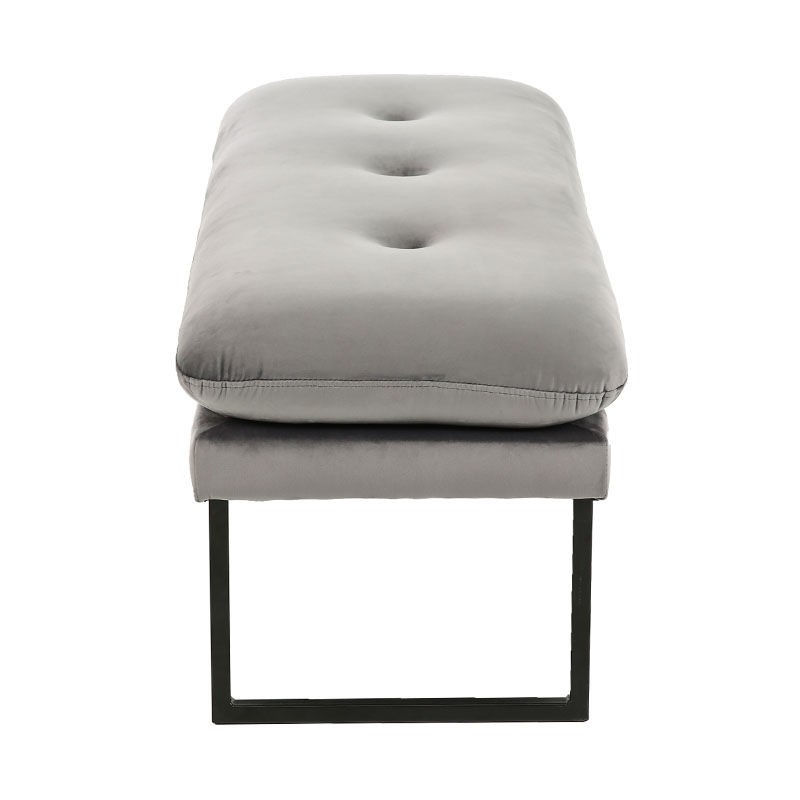 Custom Flannel Grey Design Fabric Bench Manufacturers, CompanyAnhui Ningxing Furniture Co., Ltd. is China Custom Flannel Grey Design Fabric Bench Manufacturers and Company,Product size: W114*D44*H45P...View Product →
If you prefer a bench that doubles as a decorative bed-end focal point, the Printed Pillow Bed-End Fabric Bench adds a soft, tufted aesthetic with integrated pillow-like cushioning. The height and depth are scaled to a standard queen or king bed, and the removable upholstery cover simplifies upkeep in a dusty bedroom environment. When selecting any bed-end bench, confirm the overall depth does not exceed 20 inches so it doesn’t block the walkway.
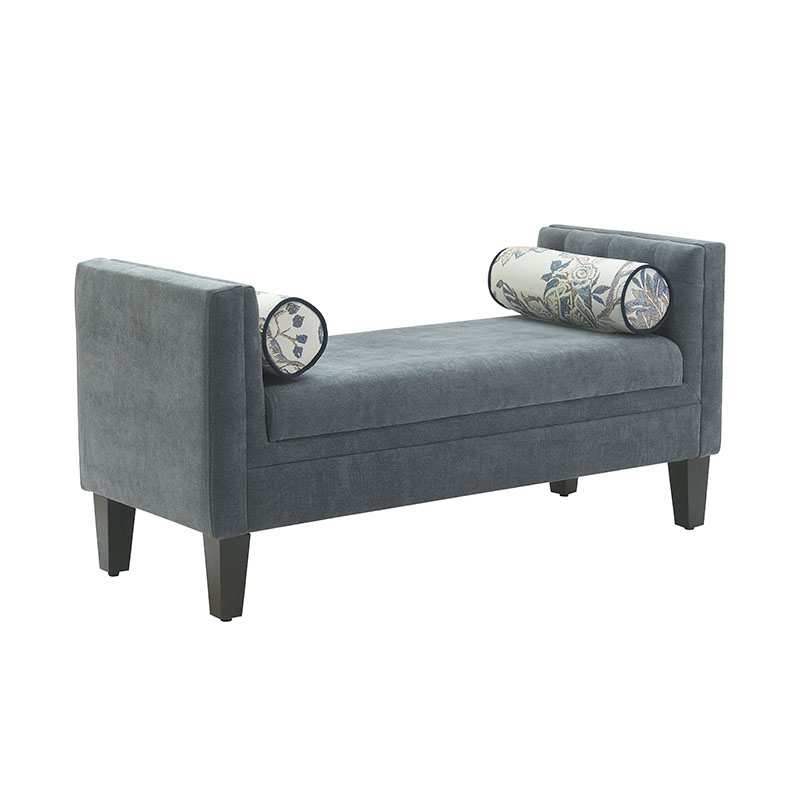 Custom Printed Pillow Bed End Fabric Bench Manufacturers, CompanyAnhui Ningxing Furniture Co., Ltd. is China Custom Printed Pillow Bed End Fabric Bench Manufacturers and Company,Product size: W115*D45*H...View Product →
Maintenance and Longevity: Keeping the Fabric Looking Fresh
Most fabric bench covers carry a cleaning code—W, S, or WS—stitched under the cushion or listed in the product tag. A “W” code allows water-based cleaners, which is ideal for homes with pets or children. “S” codes require solvent-based cleaners and are less forgiving with spills. “WS” means both are safe. Vacuum the bench weekly with an upholstery attachment to prevent dust from embedding into the weave. Rotate the cushion if it is reversible, and tighten the leg hardware every six months. A fabric bench maintained this way can retain its original comfort and appearance for seven to ten years.
A one-time professional fabric protection treatment applied after purchase can extend the stain-free window by up to 50%, especially on light-colored polyester or linen blends.