 0
0

 English
 简体中文
简体中文

Content
Most people buy a bench for looks. Six months later, it's buried under coats, or it wobbles every time someone sits down, or it turned out to be 10 cm too long for the space. A faux leather bench done right solves three problems at once—seating, storage, and style—but only if you match the right piece to the right room. This guide cuts through the noise and tells you exactly what to look for.
Where You Put It Changes Everything
The entryway and the bedroom foot-end are the two most common spots, but they have very different demands. An entryway bench takes daily abuse—bags dropped on it, shoes kicked underneath, wet coats brushed against it. That's where faux leather earns its keep: the smooth surface wipes clean with a damp cloth in seconds, unlike fabric that traps dust and absorbs moisture.
A bedroom bench at the foot of the bed is gentler work. Here the priority shifts to aesthetics and comfort—you're sitting on it briefly each morning and evening. Softer cushioning and a slimmer profile tend to work better in this spot, so the bench doesn't dominate the room's footprint.
Living rooms and home offices are a third use case, especially open-plan spaces where a bench doubles as occasional seating when guests arrive. For these situations, the design detail matters more than the storage function.
How to Match Size to Your Space
Oversizing is the most common mistake. A bench that's too long turns a hallway into an obstacle course. The general rule: leave at least 60–90 cm of clearance on either side of the bench, and measure the width of your room before you browse.
Two solid benchmarks from actual production specs:
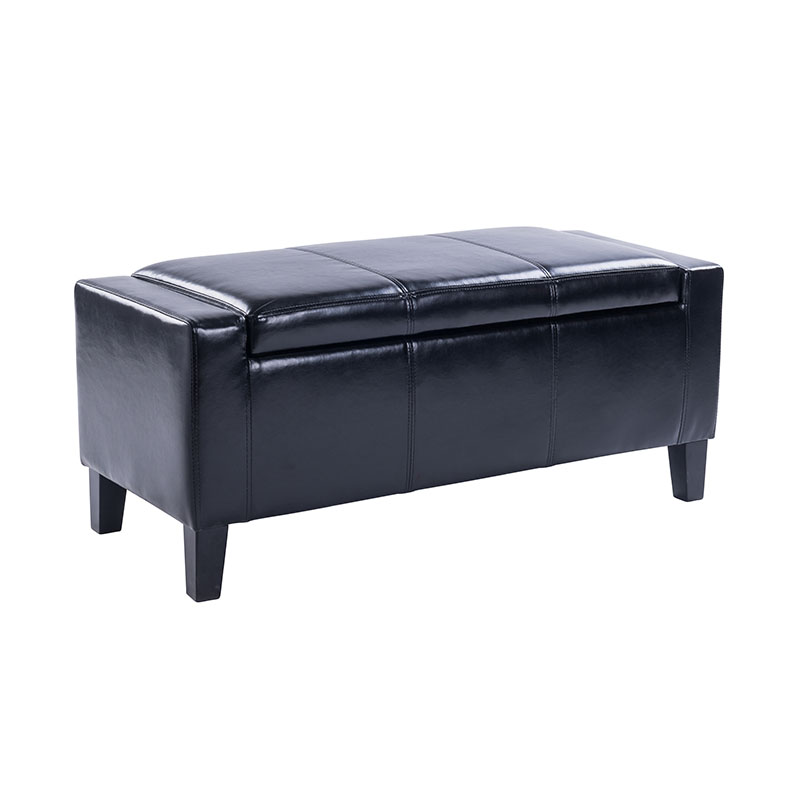
- L112 × W43 × H46 cm — the footprint of the Black Leather Bench with Shoe Storage. This length handles a king-size bed end comfortably and fits into most entryways without feeling cramped.
- W106 × D43 × H42 cm — the dimension of the Forest Color Cross Leg Leather Bench, slightly lower in seat height (42 cm vs 46 cm), which gives it a more relaxed, casual feel suited to bedrooms.
Seat height is often overlooked. A 46 cm seat height aligns with standard chair ergonomics and is easy to stand up from. A 42 cm seat sits lower—fine for lounging, slightly harder for older users to rise from repeatedly.
Storage or No Storage: Make the Call Early
A bench with built-in shoe storage isn't just a style choice—it's a space-planning decision. The faux leather bench with a lower shelf keeps footwear visible and accessible, which works well near an entrance. The trade-off is that it requires clear floor space around it; the shelf can't be pushed flush against a wall without blocking the storage opening.
If floor space is tight, a closed-top storage ottoman bench is often a smarter move—it hides contents completely and can be pushed against any wall. For a side-by-side look at storage and non-storage upholstered pieces, the faux leather storage ottoman collection covers that territory well.
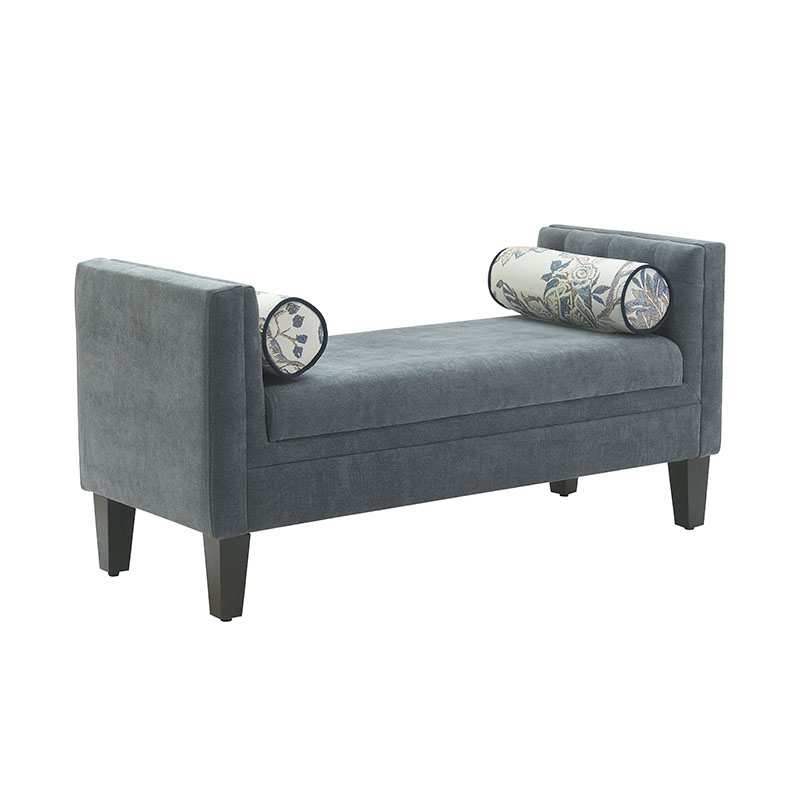
Decorative benches without storage—like a cross-leg design—work best where clutter isn't the problem you're solving. A bedroom that's already tidy doesn't need hidden compartments; it needs something that looks intentional.
The Material Beneath the Surface Matters More Than the Surface Itself
Faux leather gets all the attention, but what's underneath determines whether you're still comfortable on the bench three years from now. High-resilience (HR) foam holds its shape under repeated use—standard foam compresses and stays flat. A multi-layer structure is the benchmark to ask for: a firm base for structural support, a softer top layer for comfort, and faux leather that flexes with body weight rather than pulling taut.
The bench legs are the other structural element most buyers ignore until something wobbles. Solid wood or metal cross-leg bases distribute weight more evenly than hollow plastic feet. The cross-leg design with a white brushed finish, for example, doubles as a decorative feature while delivering genuine structural stability through the X-geometry of the frame.
Compared to fabric bench alternatives, faux leather holds up better in high-moisture or high-traffic areas, though fabric typically offers a wider range of textures and warmth for purely decorative placements.
Cleaning and Long-Term Care
Faux leather's practical advantage is straightforward: spills wipe off. A damp cloth handles most everyday grime. For deeper cleaning, mild soap diluted in warm water works without damaging the surface coating. Avoid solvent-based cleaners—they dry out the material and accelerate cracking at stress points like seams and corners.
Two habits that extend bench life significantly: avoid placing it in direct sunlight (UV degrades synthetic leather faster than genuine leather), and condition the surface every six months with a purpose-made faux leather conditioner. Edges and seams are the first spots to show wear, so pay attention there during cleaning.
Storage benches have an additional maintenance point—the inside. Airing out the storage compartment periodically prevents moisture buildup, particularly important in entryways where wet shoes and boots are stored.
What to Actually Check Before You Buy
Run through this list before committing to any piece:
- Does the seat height work for the primary user (standard ergonomic range is 43–48 cm)?
- Is the bench length at least 10 cm shorter than the bed width, or narrow enough for the entryway with clearance?
- Does the storage opening face outward from the wall if it has a shelf?
- Are the legs solid material (wood or metal) rather than hollow plastic?
- Is the foam described as high-resilience or high-density, not just "thick cushion"?
A well-specified faux leather bench is a long-term addition to a room, not a short-term fix. Get the dimensions, the foam spec, and the leg construction right, and the aesthetic will follow.