 0
0

 English
 简体中文
简体中文

Content
A sofa usually fails in one of three ways: it sits two inches too deep for the room, it will not turn the corner of a narrow stairwell, or it locks you into one layout that stops working the moment your household changes. A modular sectional sofa is built to avoid all three. Instead of a single fixed frame, you buy a system of seats, corner wedges, and chaise ends that connect, separate, and rebuild into different arrangements. For renters, growing families, and anyone who has moved more than twice in a decade, that flexibility is the entire point. This guide explains how the modules work, where these sofas perform best, and which specifications to check before you order.
What Makes a Sectional Sofa Modular
Any sofa built in connected sections that form an L, a U, or an extended straight run counts as a sectional. A modular sectional goes one step further: each section is an independent, fully upholstered unit that can be detached, reordered, and reconnected. That is why the two terms are not interchangeable. Every modular sofa is a sectional, but a conventional corner sectional, bonded into a single frame at the factory, will keep the same geometry for its entire life.
A typical modular lineup contains four building blocks:
- Armless seats, which form the main run and set the total seating width
- Corner wedges, which turn the layout by 90 degrees
- Chaise and open ends, which extend one side into a lounging position
- Standalone ottomans, which serve as a footrest, extra seating, or a coffee-table surface
Connectors are the component buyers most often underestimate. Well-engineered systems use metal brackets, hook plates, or heavy-duty hook-and-loop strips to lock modules together, so seats do not drift apart when someone sits down. If a product listing does not state how its modules join, ask before ordering. A modular sofa with weak connectors behaves like a row of separate chairs with a permanent gap problem.
Modular vs. Fixed Sectional at a Glance
| Consideration | Modular sectional | Fixed sectional |
|---|---|---|
| Layout | Rebuildable: L-shape, U-shape, split runs, or facing seats | One permanent shape set at the factory |
| Moving and delivery | Modules pass through doorways and stairwells one at a time | One large piece that may need hoisting or on-site disassembly |
| Seat engineering | Individual cores and connectors in every module | A single frame with uniform construction throughout |
| Cost per seat | Higher, because every module carries its own frame and connectors | Lower for the same total footprint |
| Best suited to | Renters, movers, growing households, rooms with more than one possible layout | Settled homes with a fixed floor plan and no planned changes |
Configurations That Earn Their Footprint
The same set of modules can serve three very different rooms, and that is where the money is actually saved. In a compact apartment, a three-seat run with a single chaise end covers daily lounging while claiming far less floor area than a full L-shape. When guests stay over, a convertible module folds into a flat sleeping surface and the ottoman becomes spare seating. In a larger living room, the same pieces spread into a U-shape around a media wall. On moving day, every module passes through the doorway on its own, with no sofa hoist and no window crane.
Two layouts do most of the work in small homes:
- L-shape: two runs joined by a corner wedge. It seats more people per square meter than any other arrangement and defines an open-plan zone without adding walls.
- Straight run with a chaise: keeps one side open for walkways, which matters in narrow rooms where a second arm would block circulation.
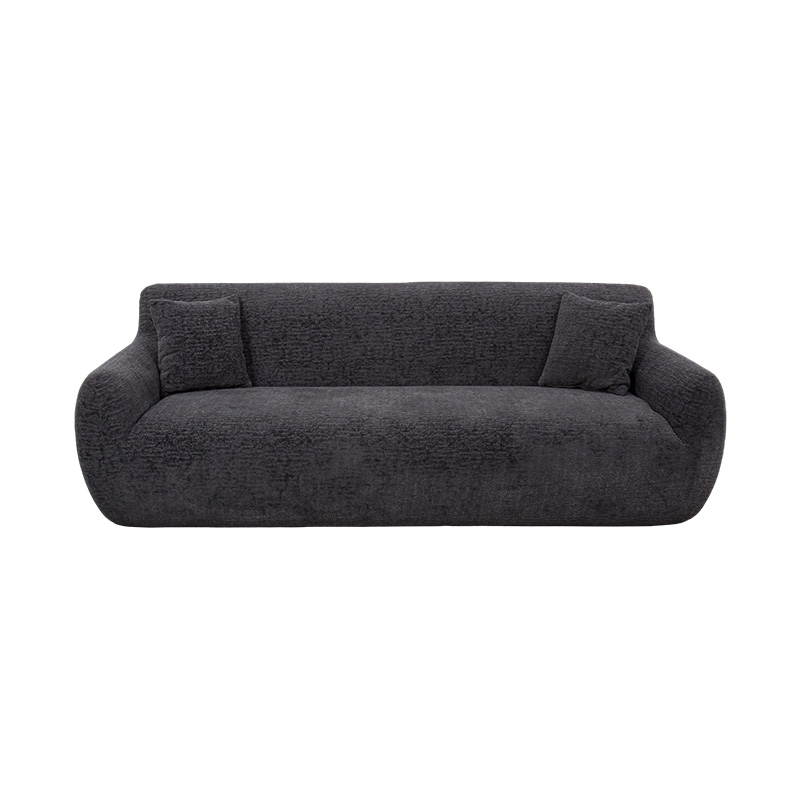
Because modules are sold individually, you can also start small and extend later. A freely combinable design in a neutral dark gray, for instance, can begin as a two-seat arrangement and grow into a corner setup without replacing anything you already own.
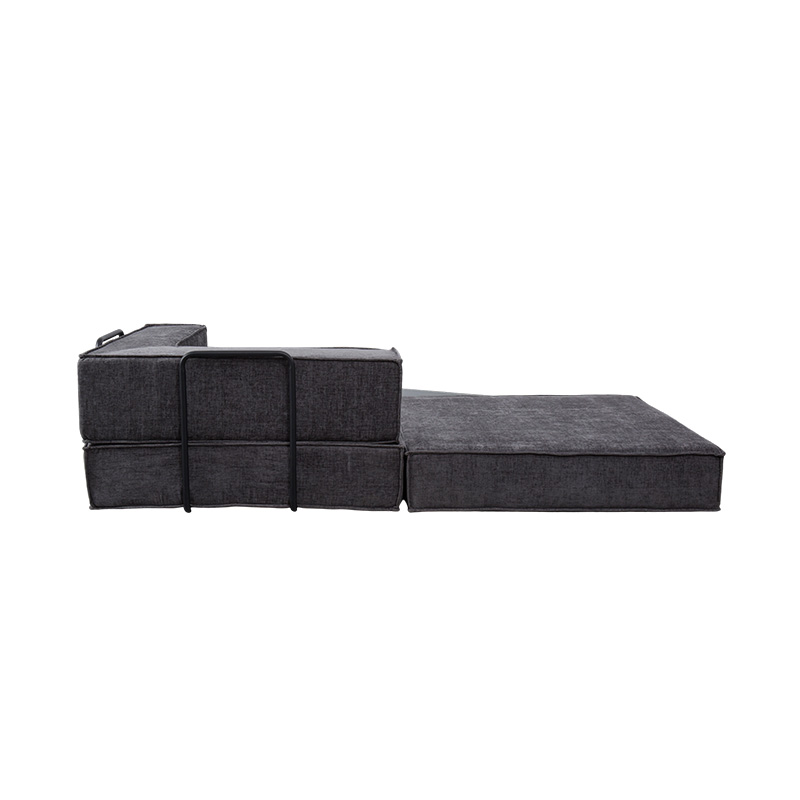 Creative Modular Sofa in Dark Gray FabricA freely combinable full-foam sofa in neutral dark gray chenille, sized 98cm wide with no assembly required. It suits the article's advice to start with a small two-seat arrangement and extend into a corner setup later without replacing existing modules.View Product →
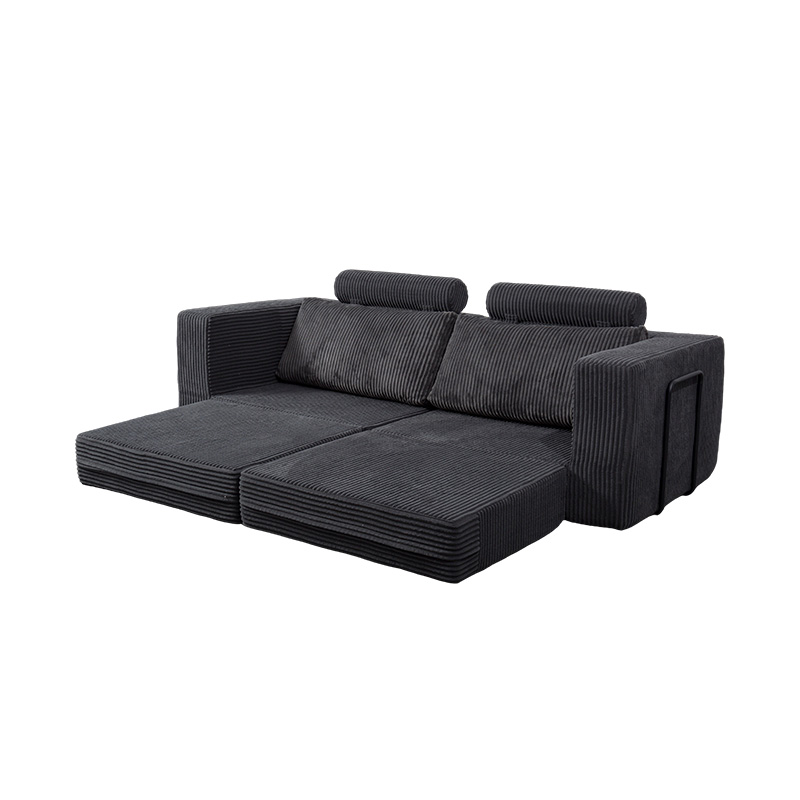
If overnight guests are a regular event rather than an occasional surprise, look for modules engineered to convert rather than simply rearrange. A transformable modular sofa-bed applies the building-block logic one step further: the seating modules reposition into a level sleeping surface, which removes the need for a separate guest bed in a one-bedroom apartment.
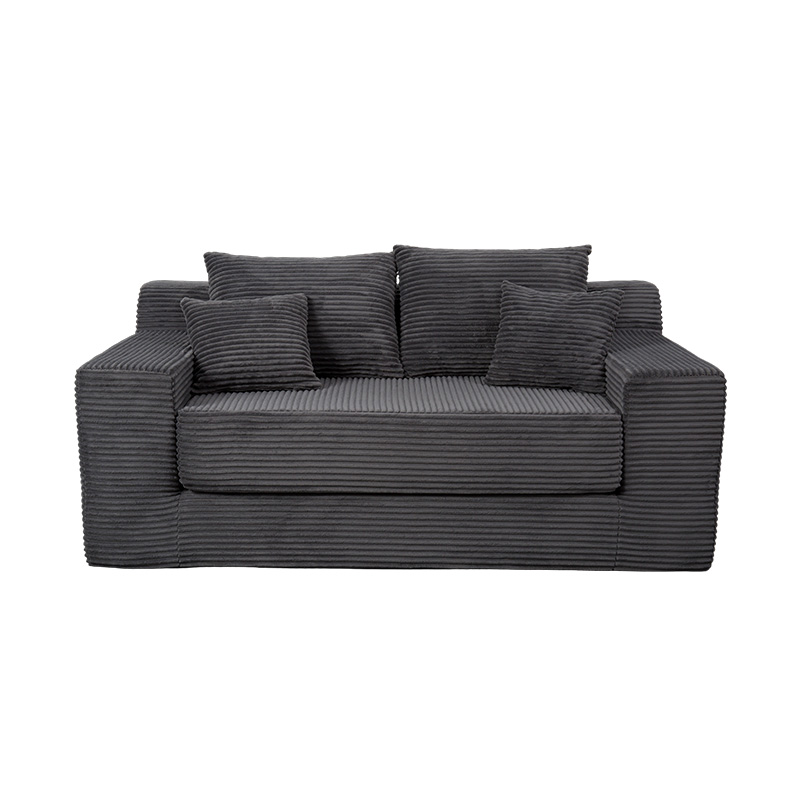 Transformable Modular Sofa Bed in Dark Gray CorduroyThis sofa bed converts from a 172cm three-seat sofa into a level sleeping surface for guests, with multiple cushions for lumbar or bed padding. It fits the article's point that converting modules remove the need for a separate guest bed in small apartments.View Product →
Why the Seat Core Matters as Much as the Shape
Modularity adds physical stress that a fixed sofa never experiences. Modules get lifted, slid across the floor, and re-clipped every time you clean underneath or rebuild the layout, so the core inside each seat has to recover its shape repeatedly, not just survive years of sitting in one spot. Construction quality is what separates products that look identical in photographs.
Traditional sectionals rest on a spring frame, with sinuous springs or pocket coils under the cushions. Full-foam construction removes the springs entirely: high-density foam forms the seat deck, backrest, and arms as one continuous supportive structure. In a modular design the advantages compound. Foam cores hold their shape through repeated handling, the seat feel stays consistent from the first module to the last, and nothing deforms at the joints where two modules meet. Foam also delivers support within a lower profile, which suits the clean, low-slung silhouettes most modular systems favor.
The trade-offs deserve mention. All-foam seats feel firmer at first than spring-backed ones, and long-term performance depends heavily on foam density. Low-density foam softens within a couple of years; high-resilience foam at the correct density holds its shape for a decade or more. Because the foam is invisible once upholstered, buy from a manufacturer that states its density specifications rather than a listing that only describes the fabric. We operate our own foam factory alongside our finished-furniture plant precisely so that the density and resilience inside each module stay under our control rather than a supplier's. We have also set out in detail why full-foam sofas keep replacing spring designs as the default choice.
A deep blue corduroy modular set with cushioned full-foam modules shows how construction and color depth work together: the tightly woven pile hides everyday wear, while the foam core keeps the low profile genuinely supportive rather than just low.
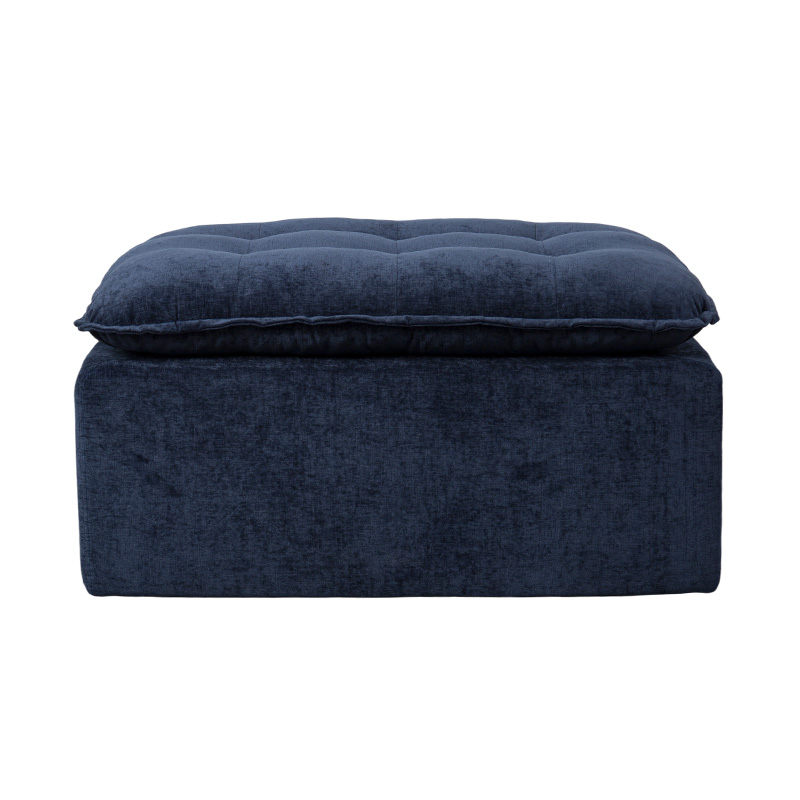 Modular Full-Foam Sofa Set in Deep Blue Corduroy with OttomanA frameless single sofa with matching ottoman, built on D35 foam that keeps the low profile supportive through repeated rearranging. The tightly woven deep blue upholstery hides everyday wear, illustrating how construction and color depth work together.View Product →
A Buying Checklist Before You Commit
Modular sectionals are straightforward to evaluate if you work through the physical constraints in order, and the sequence matters more than any single item:
- Measure the delivery path first. Every module must clear your building's doorway, stairwell width, and elevator depth; check the tightest turn, not the widest opening.
- Map the room in plan view. Mark the walls the sofa will touch, then confirm each run leaves 75 to 90 centimeters of walkway for circulation.
- Count seats rather than meters. A run of four seat modules plus a chaise seats four adults comfortably; a total width on a spec sheet will not tell you that.
- Inspect the connector hardware. Ask whether modules join with metal brackets, hook plates, or fabric straps, and whether the connectors sit hidden beneath the seat line.
- Request the foam specification. Density figures predict whether the seat core still feels supportive in year five.
- Check the cover construction. Removable, zip-off covers extend the usable life of any fabric in a household with pets or children.
Two further checks are specific to modular systems. First, confirm that modules sold today will remain compatible with pieces you add later, and ask whether the connector system and module heights are standardized across the range. Second, weigh the total cost against a fixed sectional of the same footprint: modular units cost more per seat because every module carries its own frame and connectors, but that premium is typically repaid at the first house move. For a framework that covers sizing, materials, and layout planning for any sofa, our dedicated guide to choosing the perfect living room sofa walks through the full decision.
Fabric, Color, and Finishing the Room
Fabric choice carries extra weight on a modular sectional because there is more surface area, more edges, and more seams. Chenille offers a soft, light-catching pile with strong everyday durability. Corduroy brings a ribbed texture that resists abrasion well and reads casual. Velvet looks formal, though modern performance weaves handle daily use far better than their reputation suggests. In every case, favor a tight weave and a high abrasion rating if the sofa will serve a full household.
Color works differently on modular systems as well. Because modules separate during a rebuild or a move, mid-tones such as dark gray, deep blue, and cream hide minor seam and dye-lot variations better than stark white, while still anchoring the room.
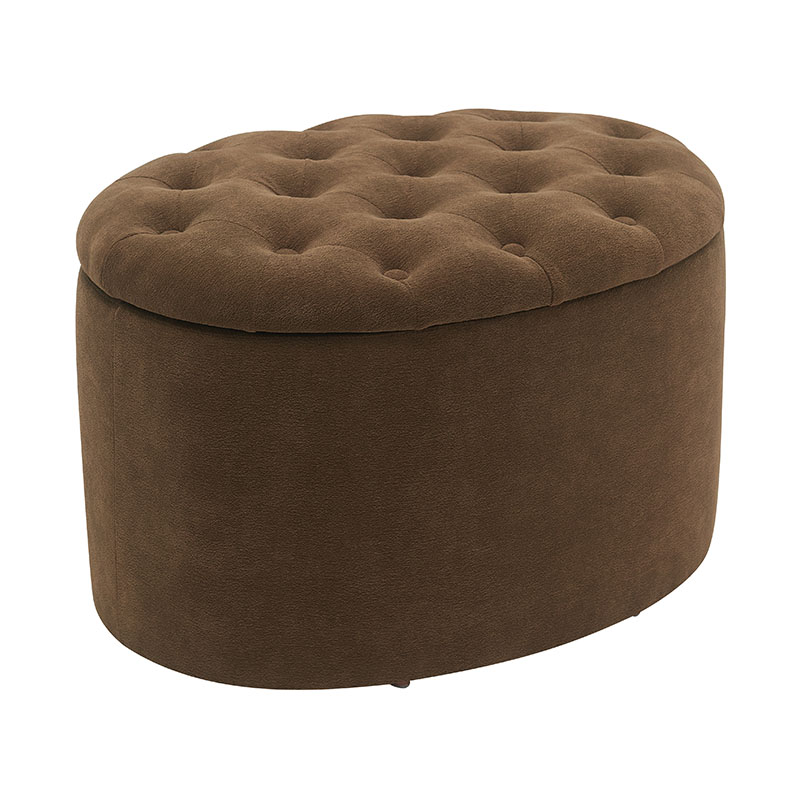
Finally, treat the sectional as the base layer of the seating plan rather than the whole plan. A storage ottoman in the same fabric family doubles as a footrest and a place to keep throws and board games. A bench placed along the back of the chaise end covers the gap where a side table would crowd a walkway. These pairings are how compact living rooms gain function without gaining furniture footprint.
A modular sectional sofa is the right call when your room, your household, or your address is likely to change, and a poor value if none of them will. Layout flexibility, stairwell-friendly delivery, and the option to extend later are genuine, measurable advantages, but they depend on connector quality, foam density, and a fabric suited to daily use. Verify those three before you fall for a color, and the sofa will still make sense long after the room it was bought for has changed.