0

 English
 简体中文

Content
Most buyers arrive at this category after one specific failure: a spill that will not spot-clean, a pet that has claimed the left-hand corner, or a third-floor flat where the stair turn rules out a one-piece sofa. Modular solves the doorway. Washable solves the stain. The two features are normally sold together but they fail independently, so each one deserves its own check before you approve a sample.
Why a washable cover changes the ownership math
A washable cover turns the most exposed part of a sofa into a replaceable component, which is why households with pets and small children keep the same frame far longer than they would with fixed upholstery.
Fixed fabric fails from the outside in. Sun fade, oil from hands and one spilled drink can retire a sofa whose frame and foam are still sound. When covers come off, the failure stays local and reversible: you wash one panel or order a replacement, and the seat keeps working. The cover is the wear item, not the furniture.
There is a trade-off worth naming. Removable covers add seams, zips and a little slack, so a loose-fit cover never looks as taut as stapled upholstery. If the room depends on a crisp tailored line, expect the fit to sit between a slipcover and fixed fabric, and specify a tighter seat deck to compensate.
Cover fabrics: what survives the machine
Tight-weave corduroy, chenille and performance polyester blends hold up best across repeated home washing, while loose linen weaves and bonded faux leather are the weakest options once a cover has to be removable.
| Fabric | Wash behaviour | Shrinkage risk | Best suited to |
| Corduroy, 8-12 wale | Holds colour, pile flattens slightly when wet | Low if pre-shrunk | Family rooms, homes with pets |
| Chenille | Soft hand, needs a low spin to avoid crushing | Medium | Low-traffic living rooms |
| Velvet and velour | Recovers with brushing once dry | Medium to high | Guest rooms, occasional seating |
| Linen blend | Wrinkles heavily, needs pressing while damp | High unless washed cold | Warm climates, adult households |
| Faux leather | Wipe-clean surface, not machine washable | Not applicable | Dining nooks, home offices |
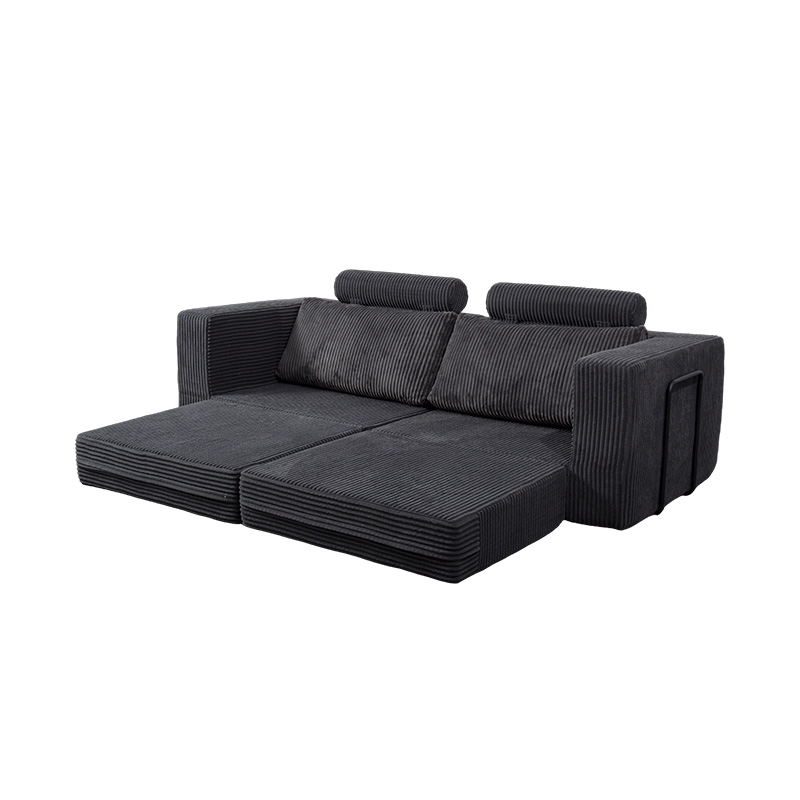
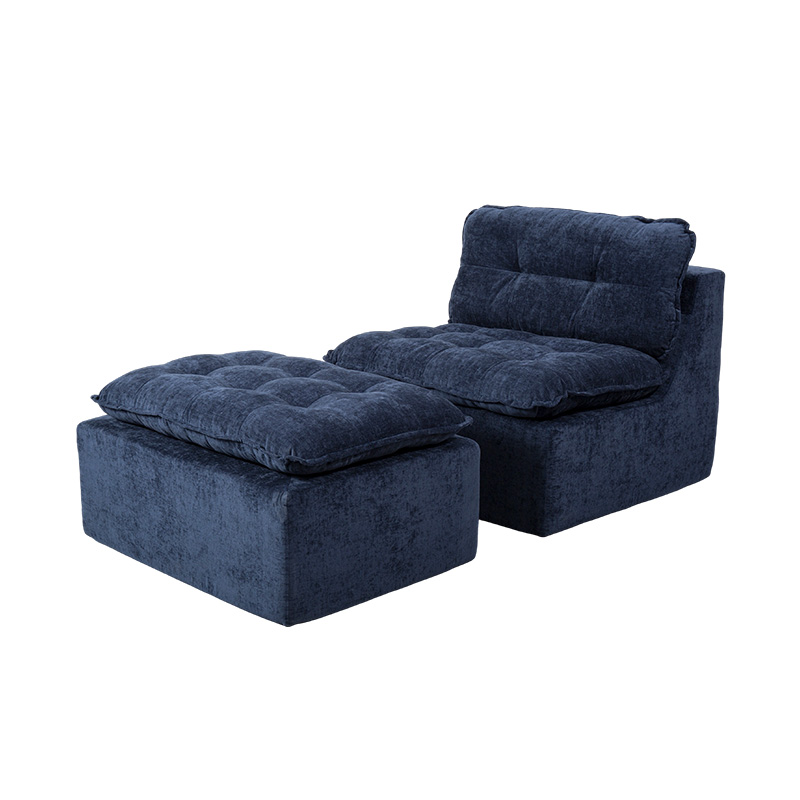
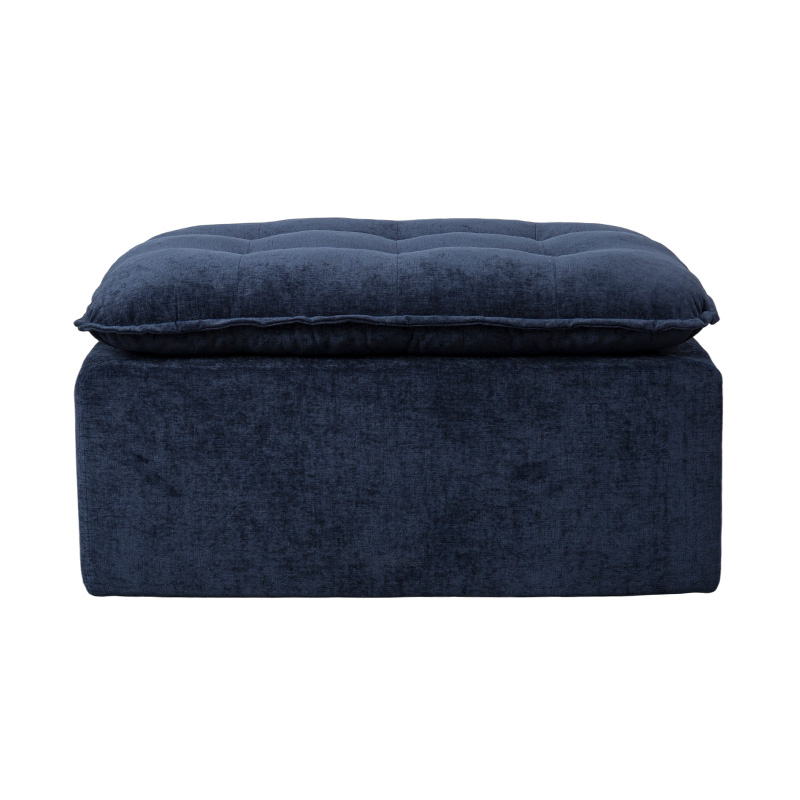 Deep Blue Corduroy Modular Full-Foam Sofa Set with OttomanA no-install full-foam sofa and ottoman in tight-weave corduroy and chenille, suited to flexible seating where pile-fabric care can be managed.View Product →
Pile fabrics need one extra habit: turn the cover inside out, skip the spin and dry it flat, because a fast spin presses the pile into creases that a brush will not lift.
Foam, frame and connectors
Foam density and connector hardware decide whether a modular sectional still reads as one sofa after two years, so those two specifications matter more than the fabric you choose.
- Check foam density. Seat cushions in the 35-45 kg/m3 range hold their shape; anything under 28 kg/m3 softens into a hollow within a year of daily use.
- Confirm module repeatability. Identical module widths let you add or replace a single unit later instead of retiring a whole set.
- Inspect the connector. Metal brackets with locking pins hold alignment far better than hook-and-loop tape or plastic clips.
- Look at the base. A recessed plinth keeps modules from drifting on rugs and stops the gaps that appear when legs slide.
Full-foam construction removes the spring deck entirely, which is what makes a deep, relatively light module possible: a dense foam block, wrapped and shaped, with no sinuous springs to poke through after a decade of use.
Layout planning: measure the route, not the room
Measure the tightest point on the delivery route before you measure the wall, because a modular sectional only delivers its advantage if every module clears the door, the stair turn and the lift.
Fixed sofa
- Whole piece must pass the tightest doorway
- Cleaning limited to spot treatment
- Layout locked at purchase
- Damage usually means replacement
Modular washable sectional
- Modules carried one at a time
- Covers washed or replaced per seat
- Layout adjusted when the room changes
- Single panel or module swapped
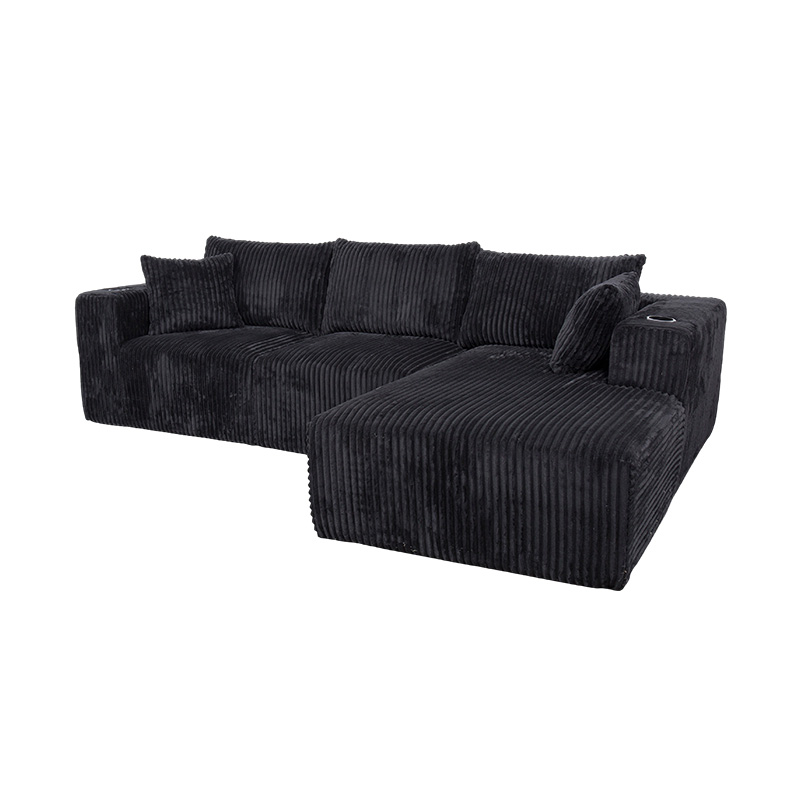
As a working rule, a three-module L-shape occupies roughly 2.6 m by 1.7 m of floor, and the long side should keep 90 cm of clear walkway. In a room under 20 square metres, two modules plus an ottoman usually reads better than a full corner, because the open end keeps the sightline to the window.
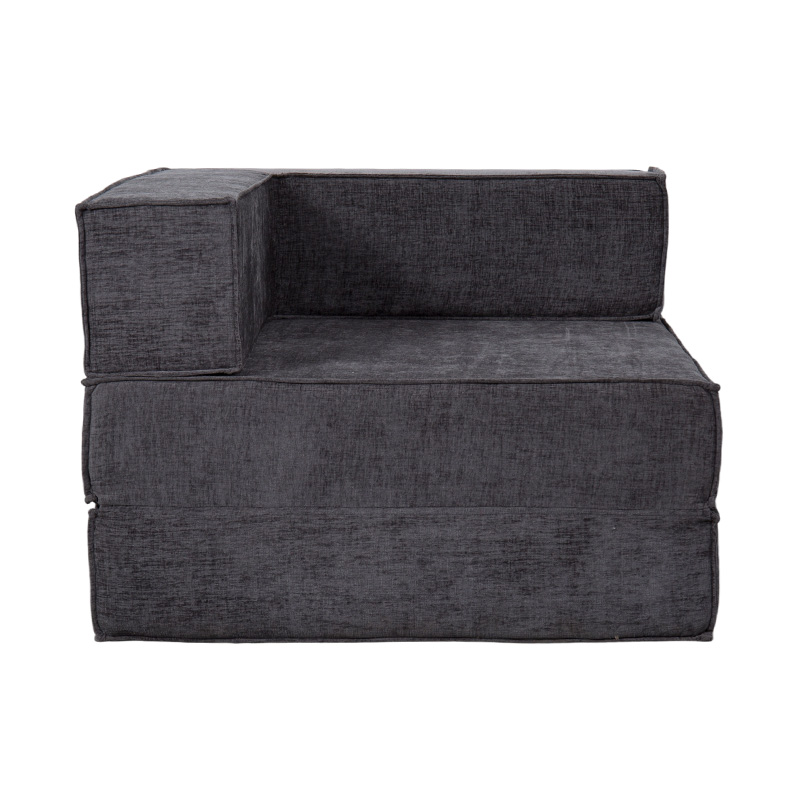
 Dark Gray Modular Chenille Sofa with Full-Foam Combinable DesignA no-tool all-foam chenille sofa that combines into two-seaters or small sectionals; a practical choice for apartments and narrow doorways.View Product →
A wash routine that keeps covers fitting
Wash covers cool, dry them flat in shade and refit them while barely damp, and the seams stay true through dozens of cycles.
- Vacuum both faces of the cover before unzipping, so dust does not turn into mud in the drum.
- Close every zip and turn the cover inside out to protect the face fabric from abrasion.
- Use a gentle cycle at 30C with a mild detergent and no fabric softener, which coats pile fibres.
- Dry flat on a rack in shade; a hot tumble dry is what actually shrinks a pre-shrunk cover.
- Refit while the fabric is slightly damp, then let it finish drying on the module for a snug fit.
What to confirm before you place the order
Confirm four points in writing before production starts: pre-shrunk fabric, foam density, module repeatability and spare-cover availability.
- Pre-shrunk stock. Ask for the washing test report, not a verbal assurance.
- Foam specification. Density in kg/m3 and the compression grade for seat versus back cushions.
- Repeatable dimensions. The same module width across the range, so future orders match.
- Spare covers. Availability of single panels in the same dye lot for the next three years.
- Zip and seam quality. Reinforced stitching at the corners, where covers take the most strain.
If you are still comparing configurations, this guide to modular sectional layouts, foam construction and buying criteria covers the measurement side in more detail. For sample requests, send the room plan and the narrowest door width through the contact page so the module split can be checked before quoting.
 Emerald Green Modular L-Shaped Corner Sofa with CushionsA 262 by 175 cm no-install corner sofa with multiple cushions and D35/60 foam, sized for small-to-medium rooms and narrow doorways.View Product →
Frequently asked questions
Can every modular sectional cover be machine washed?
No. Only covers cut from pre-shrunk, colourfast fabric with reinforced seams are safe in a machine. Bonded faux leather and dry-clean-only blends should be treated as wipe-clean surfaces, even when the cover unzips.
How often should washable covers be washed?
Two to four times a year is enough for most households. Wash the seats in daily use more often than the back panels, and keep one spare set so a cover can dry without leaving the sofa bare.
Do washable covers look cheaper than fixed upholstery?
A well-cut removable cover sits close to fixed upholstery, but it will always show softer lines at the seat deck and around the arms. Piping and tighter deck panels close most of the visual gap.
What is the smallest practical module for a small flat?
Around 70 to 80 cm of seat width per module works for compact rooms, and a two-module setup plus a storage ottoman seats three adults without blocking the walkway.