 0
0

 English
 简体中文
简体中文

Content
- 1 One Piece, Four Jobs: Why Storage Stools Belong in Every Room
- 2 Fabric vs. Faux Leather: Choose Based on Your Life, Not Just Your Decor
- 3 Size and Weight: Get This Right Before Anything Else
- 4 Where to Use a Storage Ottoman (Beyond the Living Room)
- 5 How to Style a Storage Ottoman So It Actually Looks Intentional
- 6 What to Look for When Buying: A Short Checklist
- 7 The Bottom Line on Storage Stools
One Piece, Four Jobs: Why Storage Stools Belong in Every Room
Most furniture does one thing. A storage ottoman does four: it holds your stuff, gives you a seat, rests your feet, and anchors the look of a room. That's the reason stools for storage have become one of the fastest-growing categories in home furnishings — not because they're trendy, but because they solve a real problem that single-purpose furniture never could.
Smaller living spaces, minimalist design trends, and the practical needs of families with kids have all pushed demand for multi-functional pieces. A storage ottoman sits at the center of that demand, delivering hidden organization without a single extra square foot of floor space.
Fabric vs. Faux Leather: Choose Based on Your Life, Not Just Your Decor
The two dominant material choices for storage ottomans are fabric and faux leather — and the right one depends entirely on how you live, not just how you decorate.
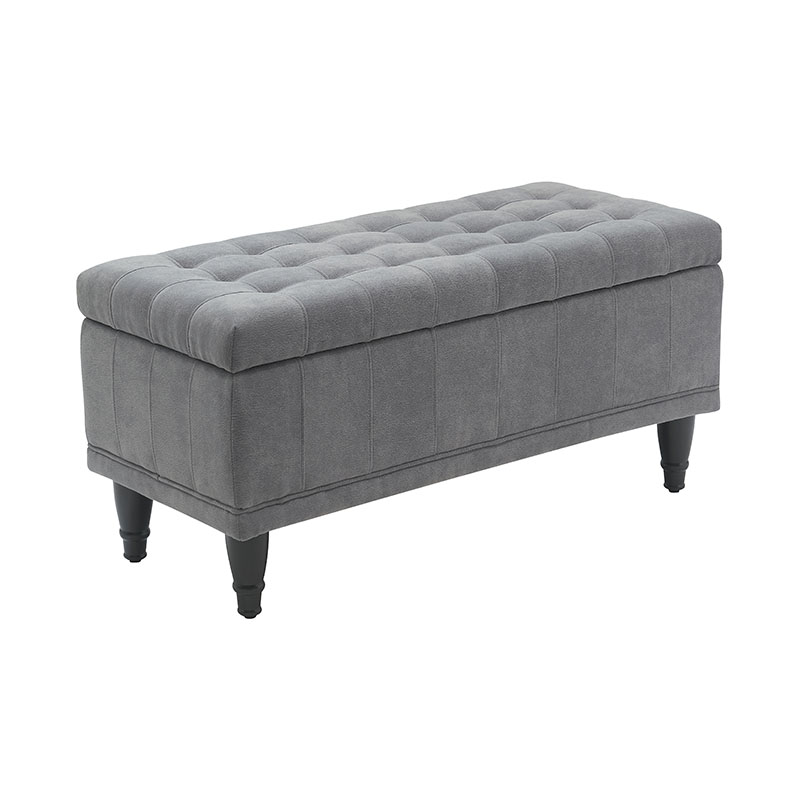
Fabric storage ottomans excel in warmth, texture variety, and acoustic softness. Teddy fleece, linen, velvet, and chenille all add visual richness to a room. They pair naturally with upholstered sofas and work especially well in bedrooms or reading corners where comfort is the priority. The fabric storage ottoman collection — from simple light-grey bed-end benches to colorful bread-shaped stools and cozy teddy brown squares — shows just how wide this category spans in both form and function.
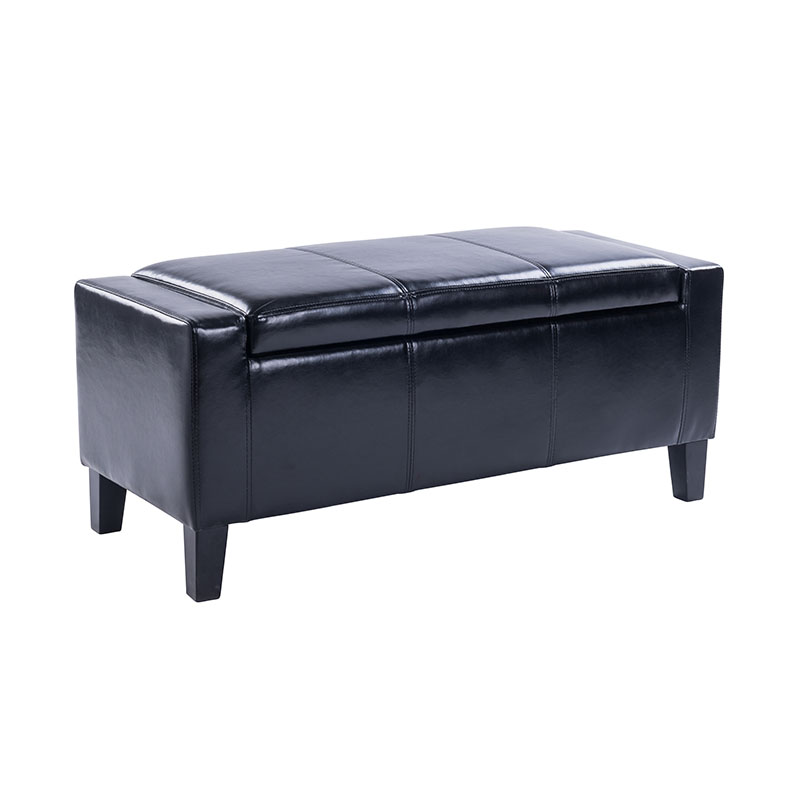
Faux leather storage ottomans, on the other hand, win on durability and ease of maintenance. Spilled coffee? One wipe. Pet hair? Doesn't stick. For entryways, children's rooms, and high-traffic living areas, a faux leather surface holds up far better over time. The faux leather storage ottoman range includes a sleek black model on rubber wood feet for a minimal look, and an English-style piece with casters for flexibility — you can roll it wherever it's needed.
Size and Weight: Get This Right Before Anything Else
The most common mistake buyers make is choosing based on looks without checking dimensions. Standard storage stools range from about 12" to 24" per side — a significant spread that determines both how much you can store inside and how well the piece fits your room.
For seating use, the structural integrity of the frame matters just as much as the exterior finish. A well-built storage stool should comfortably support 80–100 kg without flex or creak. This is the benchmark to hold manufacturers to: anything below that rating should be treated as decorative-only, not functional seating.
As a rule: measure the space first, then shop. Leave at least 45 cm of clearance around the ottoman so the lid can open without obstruction and the piece doesn't crowd adjacent furniture.
Where to Use a Storage Ottoman (Beyond the Living Room)
The living room is the obvious choice, but it's not the only one. Storage stools solve specific problems in multiple rooms:
- Bedroom: Placed at the foot of the bed, a storage ottoman replaces the awkward bedroom chair that always ends up covered in clothes. It holds extra blankets, off-season items, or bedside extras, and provides a natural surface to sit while getting dressed.
- Entryway: A compact stool near the front door gives you somewhere to sit while changing shoes — and a place to store them. Faux leather is ideal here due to mud, dust, and scuff resistance.
- Children's rooms: A fabric storage stool is one of the most practical pieces of kids' furniture. It's soft if they bump into it, holds toys and books, and doubles as casual seating when friends visit.
- Home office: As a side piece, it holds cables, notebooks, or tech accessories — and serves as occasional guest seating without a second chair cluttering the room.
How to Style a Storage Ottoman So It Actually Looks Intentional
The difference between a storage ottoman that looks placed and one that looks thrown in comes down to three things: scale, color, and pairing.
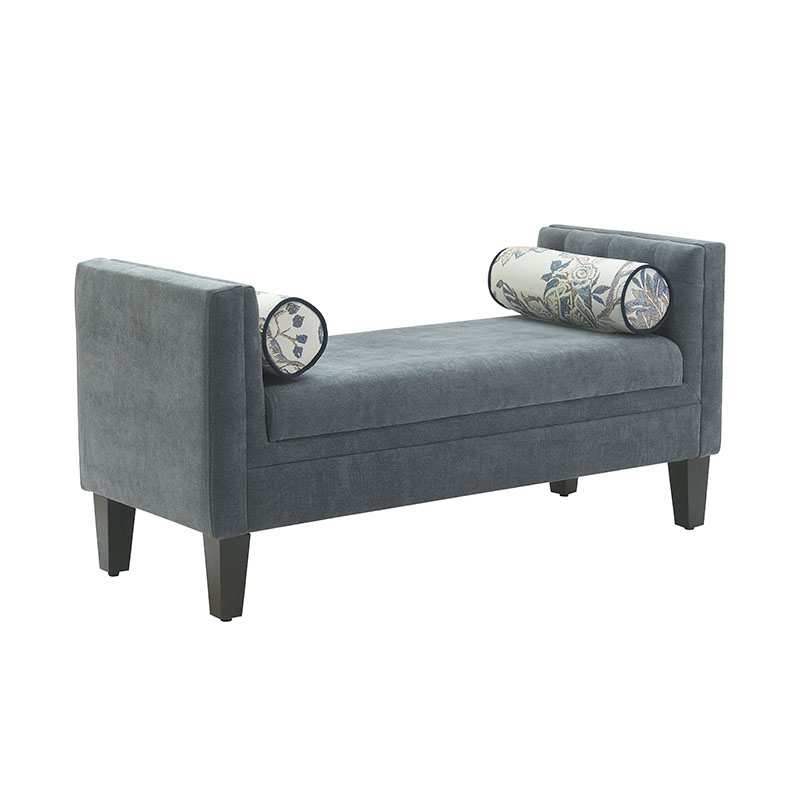
Scale first: the ottoman's footprint should be roughly two-thirds the width of the sofa it sits in front of. Too small and it reads as an afterthought; too large and it blocks circulation. Color next: a tone-on-tone approach (slightly lighter or darker than the sofa) creates cohesion, while a contrasting color — like a warm brown teddy stool against a grey sofa — creates a deliberate focal point. Finally, pairing: a storage ottoman works particularly well alongside a storage bench at the end of a bed or near a leisure chair — repeating the storage-as-seating concept across a space gives the whole room a sense of intention.
Adding a tray on top instantly converts a soft-top ottoman into a surface for drinks, books, or a small lamp — no structural modification needed, and fully reversible.
What to Look for When Buying: A Short Checklist
Before finalizing any purchase, run through these practical checkpoints:
- Internal dimensions: The exterior measurements tell you how it fits your room; the internal dimensions tell you what you can actually store. Always ask for both.
- Hinge quality: Cheap hinges are the first point of failure. Look for slow-close or reinforced hinges that won't slam or bend over time.
- Frame material: Solid wood or plywood frames outlast particleboard significantly, especially under regular seating load.
- Weight rating: Confirmed 80–100 kg minimum for any piece intended as primary seating.
- Feet protection: Rubberwood feet or felt pads prevent floor scratches — a small detail that saves hardwood floors.
Mid-range ottomans (those built with plywood frames, quality upholstery, and reinforced mechanisms) consistently outperform budget options for households that use the piece daily. The price difference is real — but so is the lifespan difference.
The Bottom Line on Storage Stools
A storage ottoman earns its place in a room by doing more than any single-function piece can. The material choice — fabric for warmth and texture, faux leather for durability and easy cleaning — should reflect how the space is actually used, not just how it photographs. Get the size right, place it with intention, and you have a piece that organizes, seats, and decorates simultaneously. That's the quiet efficiency that makes the storage ottoman one of the most practical investments in home furnishings.