 0
0

 English
 简体中文
简体中文

Content
Twelve feet of wall, a 28-inch doorway, and a living room that needs to seat six people on game night but three on a Tuesday: this is where a standard showroom sofa falls apart. A custom modular couch solves the problem because the manufacturer builds the exact sections you specify, and you arrange them to fit your room instead of reorganizing your room around a fixed frame. The short version of this guide is simple: measure everything before you design, specify the fill and fabric by the way you actually sit, and work with a factory that can produce the modules you confirm in writing.
Why a Custom Modular Couch Is a Smart Investment
The clearest reason to choose a custom modular couch is flexibility that a fixed-frame sofa cannot offer. Modular couches are built from separate seat, corner, arm, and chaise units, so you can start with a three-seat configuration and extend it later. Custom sizing adds a second layer of control: you decide the overall length, seat depth, and back height instead of accepting a manufacturer's default proportions.
That combination matters most in three situations. First, rooms with unusual proportions, such as long narrow apartments, open-plan living areas, or corners interrupted by windows and radiators. Second, households that entertain: a modular L-shape can become a U-shape or two separate sofas when guests arrive. Third, anyone who expects to move: individual modules pass through stairwells and elevators that a one-piece sectional cannot fit.
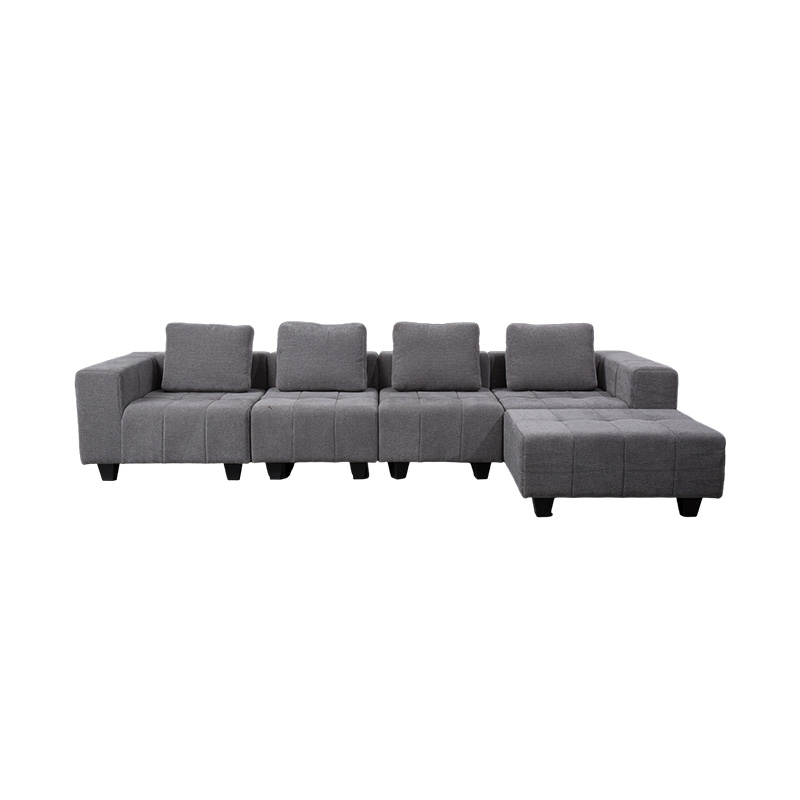
There is a practical side to delivery and repair as well. Because modules are wrapped and shipped separately, moving the couch is easier, and if one section is damaged, you replace that module rather than the whole sofa. For a visual reference, look at a design such as this freely combinable modular sofa in dark gray fabric; the seats and corner units are independent pieces, which is exactly what makes reconfiguration practical rather than theoretical.
 Custom Creative Modular Sofa in Dark Gray Fabric, Freely Combinable and Multi-FuAnhui Ningxing Furniture Co., Ltd. is China Custom Creative Modular Sofa in Dark Gray Fabric, Freely Combinable and Multi-Functional Full...View Product →
What You Can Specify in a Custom Modular Couch
A custom order is not an unlimited blank canvas. It is a set of decisions that a production line can actually execute. These are the specification points that matter most.
Modules and Layout
A modular couch can be straight, L-shaped, U-shaped, or a combination of separate sofas. Specify the number of single seats, armless middle units, corner units, and whether the chaise sits on the left or the right. If you are planning a corner footprint, a design such as this modular L-shaped corner sofa in emerald green velvet shows how a clean, unified silhouette is built from multiple independent modules.
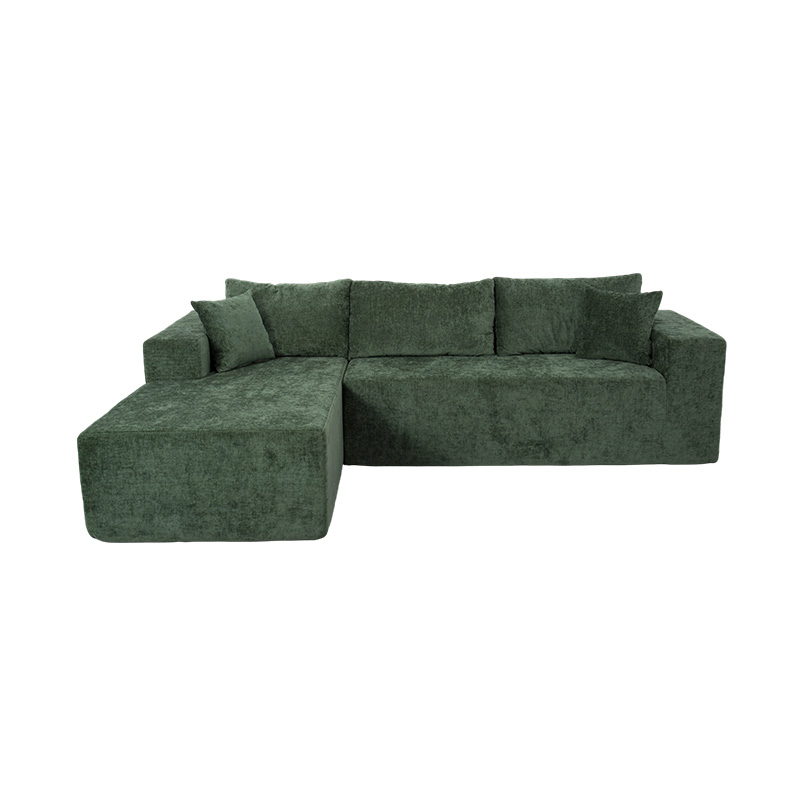 Custom Modular L-Shaped Corner Sofa in Emerald Green Velvet with Multiple CushioAnhui Ningxing Furniture Co., Ltd. is China Custom Modular L-Shaped Corner Sofa in Emerald Green Velvet with Multiple Cushions Manufactur...View Product →
Dimensions and Seat Depth
Common seat depths run from 55 to 65 cm. A depth of 55 cm suits upright sitting, while 60 to 65 cm works better for lounging. Seat height typically lands between 42 and 46 cm, and backrest height between 70 and 85 cm depending on whether you want head support. Ask for a dimensioned drawing of every module and allow a production tolerance of roughly plus or minus 1 cm.
Fill and Support: Full-Foam versus Spring
Many modular designs use full-foam construction because foam is cut into precise blocks for each module without relying on a continuous spring grid. That means consistent support at the joints between modules and no metal frames to squeak. If you want to weigh the durability argument before you confirm your fill specification, it is worth reading why full-foam sofas are built to last.
Fabric, Color, and Performance
Fabric is the most visible custom decision. Chenille and corduroy give a soft, textured feel; velvet adds depth and works well in formal living rooms; faux leather is easier to wipe clean and survives homes with pets or young children. Ask for the abrasion rating in Martindale cycles. A rating of 30,000 or above is a reasonable threshold for a household sofa, and always request a physical sample before approving a color, because screens change tones.
| Specification | What to decide | Why it matters |
|---|---|---|
| Module count | Seats, armless units, corner unit, chaise | Defines the footprint and future reconfiguration options |
| Overall dimensions | Length, depth, and height per module | Must match the measured wall and access paths |
| Seat depth | 55 cm for upright sitting, 65 cm for lounging | Directly controls sitting comfort |
| Corner side | Left or right chaise | Determines which way the L-shape flows in the room |
| Fill type | Full-foam or spring-based | Affects durability, noise, and module weight |
| Fabric | Chenille, corduroy, velvet, faux leather | Controls feel, maintenance, and abrasion life |
How to Measure and Plan Before You Contact the Factory
Spend one afternoon measuring before you spend one minute designing. The order of planning is simple:
- Measure the room. Record the full wall length, the depth available from the wall to the opposite furniture, and clearances for windows, radiators, and doors. Keep a walkway of at least 90 cm in front of the couch.
- Measure the access path. Note the widths of the apartment door, stairwell, elevator, and any hallway turns. A standard interior door is about 80 cm wide, so every module must be narrow enough to pass through.
- Set the primary layout. Decide whether the couch will be straight, L-shaped, or U-shaped, and confirm which side the chaise should sit on.
- Decide the secondary functions. If you host overnight guests, consider a sleeper module; if you need storage, add a bench or ottoman with a lid.
- Set a budget and a timeline. Custom production usually takes several weeks plus shipping, and a modular couch with more modules costs more than a single fixed frame of the same length.
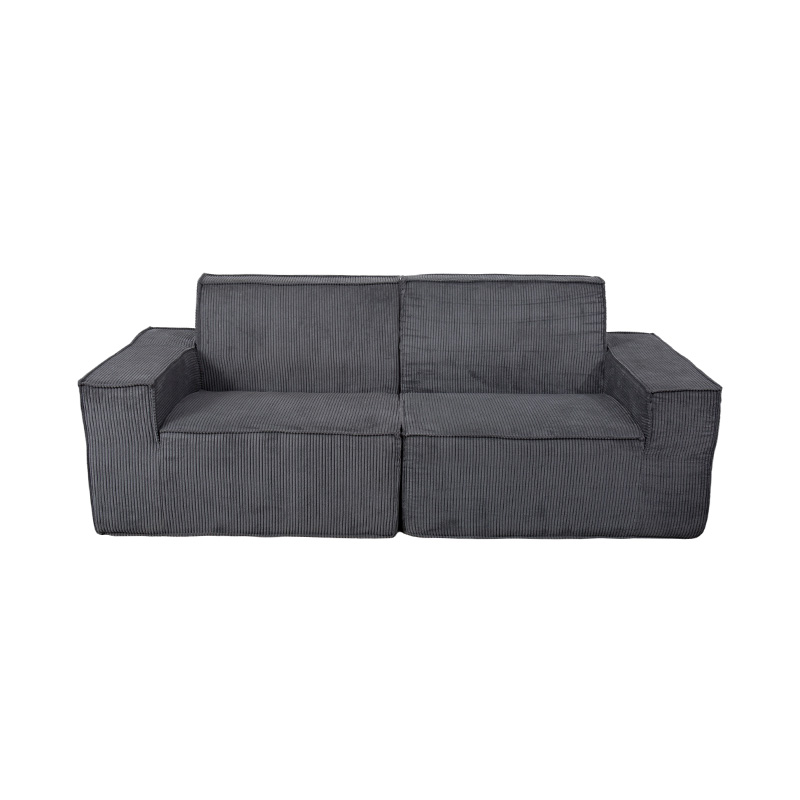
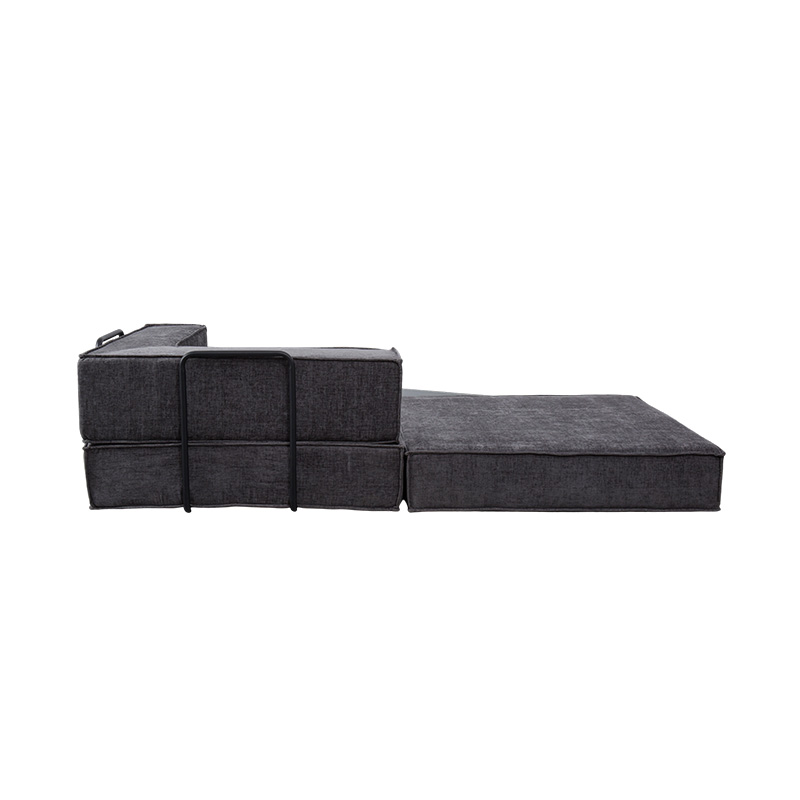
If a sleeping function is part of the plan, a transformable modular sofa bed in dark gray corduroy converts from seating to a bed without adding a separate piece of furniture to the room.
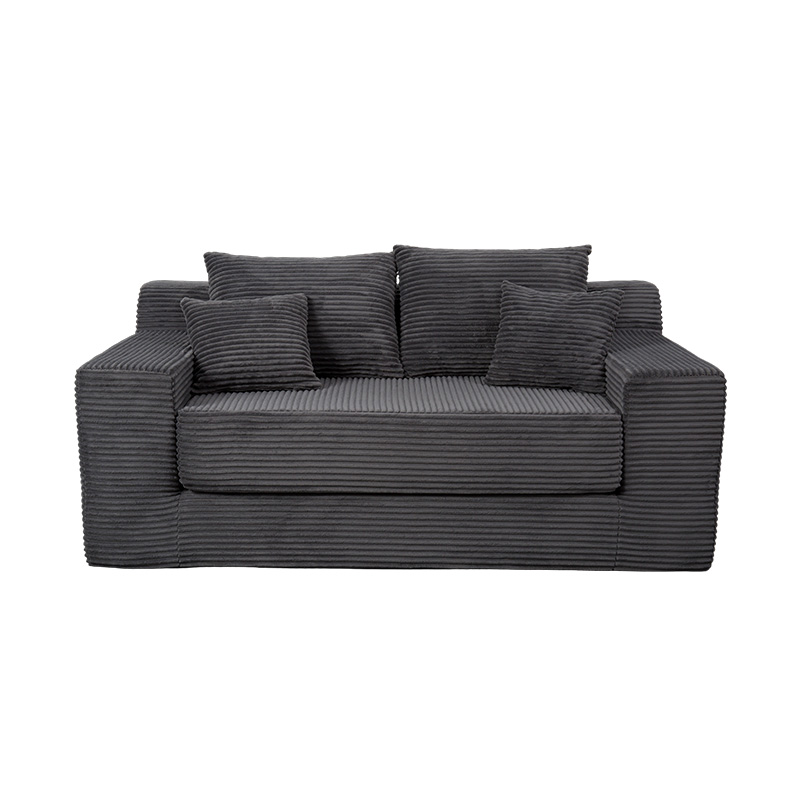 Custom Transformable Modular Sofa Bed in Dark Gray Corduroy with Multiple CushioAnhui Ningxing Furniture Co., Ltd. is China Custom Transformable Modular Sofa Bed in Dark Gray Corduroy with Multiple Cushions Manufactur...View Product →
Working with a Sofa Manufacturer: What to Ask Before You Order
Customization is only as good as the information you confirm in writing. A reliable factory will answer these questions directly, and vague answers are a reason to be cautious:
- Ask for a dimensioned drawing of every module, including seat height, seat depth, and backrest angle.
- Confirm the fabric program and request physical samples before production begins.
- Ask about foam density and construction. A density in the range of 25 to 35 kg per cubic meter is common for seating foam, and higher density generally means better long-term support.
- Clarify the minimum order quantity, whether a prototype module can be produced before the full order, and the production lead time.
- Confirm how modules lock together, whether the covers are removable for cleaning, and whether spare covers are available.
Factories that operate a direct customization channel handle these steps more smoothly than intermediaries. A useful explanation of what to expect when you order from the production floor rather than through a retailer is this overview of manufacturer-direct custom sofa designs. A producer that manufactures its own foam can also control cushion consistency more tightly, which is one reason full-foam specialists deliver more uniform modules.
Common Mistakes to Avoid When Ordering a Custom Modular Couch
- Ordering by number of seats instead of by measured wall length. A three-seat module from one factory may measure 180 cm; from another, 220 cm.
- Choosing a fixed corner that cannot be reversed later. A true modular corner with an armless turning unit keeps future layouts open.
- Assuming every module is easy to move. Ask for the weight of each unit, especially if you live upstairs.
- Approving fabric from a photo. Colors and texture differ between screens and production batches, so samples are not optional.
- Ignoring the joint system. Fabric hooks, metal clips, and interlocking brackets behave differently, and a loose joint becomes obvious after a few months.
- Forgetting about removable covers. If the cover cannot be removed, cleaning a modular couch after a spill becomes a much larger job.
The best custom modular couch is not the one with the most modules. It is the one whose numbers match your room and whose materials match your life. Measure the space, decide how you actually sit and entertain, confirm the fill and fabric with the factory, and treat the module plan as a layout that will keep changing. Start with the doorway, and the rest of the decision becomes much easier.